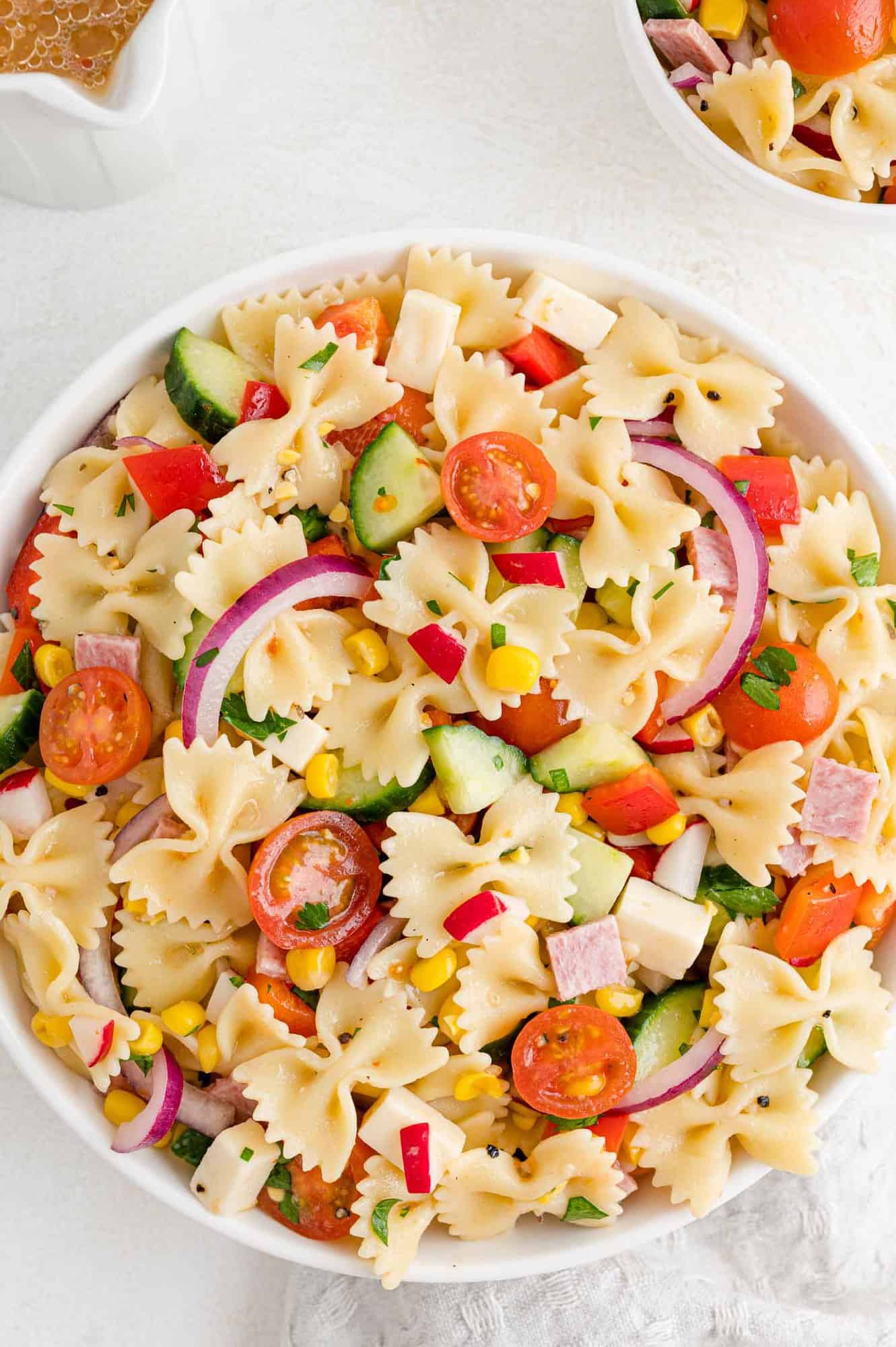
There is one dish that shows up at every single summer gathering — every cookout, every potluck, every backyard dinner — and disappears faster than everything else on the table.
It is always the pasta salad.
Not because pasta salad is complicated or impressive or requires any particular skill to make. But because when it is done right — properly seasoned, loaded with fresh vegetables, tossed in a dressing that actually has flavor — it is one of the most satisfying, crowd-pleasing, universally loved dishes that exists in the entire summer food category.
This version is that pasta salad. The one that gets asked about. The one people want the recipe for. The one that comes home with an empty bowl every single time.
Twenty minutes. One pot. One bowl. And enough servings to feed a crowd without breaking a sweat. 🙂
Why This Pasta Salad Works Better Than Most
The Dressing Goes On Hot Pasta — Not Cold
This is the single technique that separates a genuinely great pasta salad from a mediocre one and almost nobody does it. Most recipes tell you to cook the pasta, rinse it under cold water, let it cool completely, and then dress it. This produces pasta salad that tastes underdressed and flat — because cold pasta has a starchy, sealed surface that repels dressing rather than absorbing it.
The correct technique is to dress the pasta while it is still hot — immediately after draining, before it has a chance to cool. Hot pasta is porous and absorbs dressing deeply into every piece as it cools. The result is pasta that is seasoned all the way through rather than pasta that is coated on the surface only. The difference in flavor is dramatic and immediately noticeable.
The Dressing Is Bold Enough to Stand Up to Chilling
Cold temperatures mute flavor. A dressing that tastes perfectly seasoned at room temperature will taste flat and underseasoned straight from the fridge. This recipe accounts for that by building a dressing that is intentionally bolder and more aggressively seasoned than you might expect — enough acid, enough garlic, enough seasoning to taste vibrant and full-flavored even after an hour in the fridge. Never under-season a pasta salad that is going to be served cold.
It Is Genuinely Healthy Without Tasting Like Health Food
The vegetables in this salad are not an afterthought — they are half the dish. Cherry tomatoes, cucumber, bell pepper, red onion, olives, and fresh herbs create a salad that is as much about the fresh produce as it is about the pasta. The dressing is olive oil based — no mayonnaise, no heavy cream — which keeps it light and clean tasting while still being deeply flavorful. The result is a pasta salad that feels satisfying and indulgent without the heaviness of a mayo-dressed version.
Choosing the Right Pasta
Pasta shape matters more than most people realize for pasta salad and the wrong choice can genuinely affect how enjoyable the finished dish is to eat.
Rotini — the absolute best choice for pasta salad. The tight spiral shape traps dressing and small vegetable pieces in every twist, meaning every bite has maximum flavor. Visually interesting and holds its shape perfectly when chilled.
Farfalle (bowties) — the most visually appealing option. The butterfly shape looks beautiful in a salad bowl and holds dressing well in the folds. Great for when presentation matters — cookouts, parties, photographing for Pinterest.
Penne — solid, reliable, and practical. The hollow center traps dressing beautifully and the ridged surface holds more than smooth pasta. Works perfectly every time.
Fusilli — similar to rotini with a slightly looser spiral. Excellent dressing retention and a pleasant chewiness when cooked al dente.
What to avoid — spaghetti, linguine, or any long pasta. Long pasta is difficult to eat in a salad context, doesn’t hold dressing well, and creates a tangled, awkward eating experience. Always use short shapes for pasta salad.
Cook your pasta two minutes less than the package instructions suggest — al dente pasta holds its texture better when chilled and dressed than fully cooked pasta which becomes soft and slightly mushy after sitting in dressing.
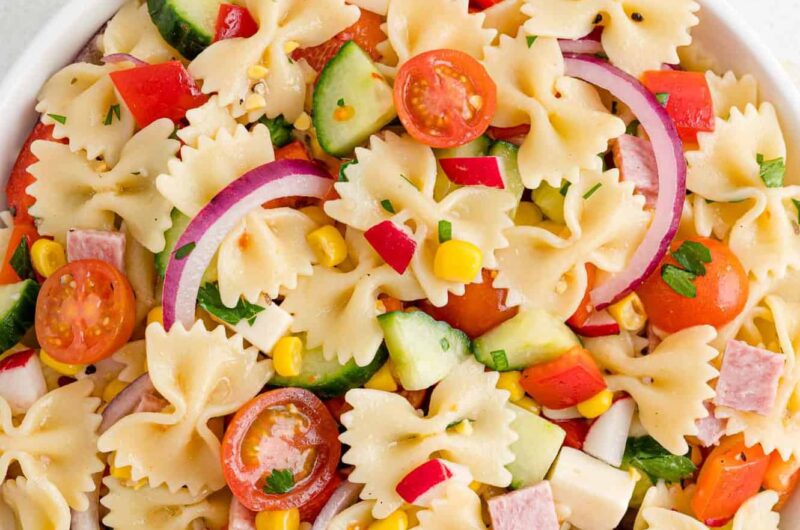
Easy Summer Pasta Salad Recipe (Crowd Pleasing, Healthy & Ready in 20 Minutes)
Course: Sides, MainCuisine: Mediterranean, AmericanDifficulty: Easy6
servings10
minutes10
minutes320
kcalIngredients
300g rotini, farfalle, or penne pasta
1 cup cherry tomatoes, halved
1 English cucumber, diced small
1 large bell pepper (red, orange, or yellow), diced small
¼ red onion, finely diced
½ cup Kalamata olives, halved
½ cup sun-dried tomatoes, finely chopped (optional)
½ cup canned artichoke hearts, drained and chopped (optional)
150g fresh mozzarella, torn — or 100g feta, crumbled
Large handful fresh basil leaves, torn
- For the dressing:
4 tbsp extra virgin olive oil
2 tbsp red wine vinegar
1 tsp Dijon mustard
1 clove garlic, minced very fine
1 tsp dried oregano
1 tsp fresh lemon zest
Salt and black pepper — season generously
Directions
- Make the dressing first — whisk together olive oil, red wine vinegar, Dijon mustard, minced garlic, dried oregano, lemon zest, salt, and black pepper in a large serving bowl. Taste and adjust — it should taste bold and slightly more aggressive than you want the finished salad to be. Set aside
- Bring a large pot of water to a boil. Add a generous amount of salt — the water should taste like mild sea water. Add pasta and cook for 2 minutes less than the package instructions for al dente texture. Before draining reserve ½ cup of pasta water.
- Drain the pasta — do not rinse. Immediately transfer hot drained pasta to the bowl with the dressing. Toss thoroughly to coat every piece of pasta in the dressing while still hot. The hot pasta will absorb the dressing deeply as it cools. Let cool to room temperature — approximately 15 minutes — tossing occasionally.
- While pasta cools prepare all vegetables — halve cherry tomatoes, dice cucumber and bell pepper to small even cubes, finely dice red onion (soak in cold water 10 minutes if preferred for milder flavor), halve olives, chop sun-dried tomatoes and artichoke hearts if using.
- Once pasta is at room temperature add all vegetables and toss gently to combine. Taste and adjust seasoning — add more salt, vinegar, or olive oil as needed. If the salad seems dry add a splash of reserved pasta water and toss again.
- Cover and refrigerate for at least 30 minutes — 1 hour is better. The flavors will meld and deepen significantly during this time.
- Remove from fridge just before serving. Add torn fresh mozzarella or crumbled feta and torn fresh basil. Taste one final time — add a small drizzle of olive oil and pinch of salt if needed as the pasta will have absorbed dressing during chilling. Toss gently and serve.
What Goes Into This Salad
Pasta — 300g of your chosen short pasta shape. This feeds four to six people as a side dish or three to four as a main.
Cherry tomatoes — halved. Sweet, juicy, and the most reliable tomato for pasta salad because they are consistently good in flavor year round. Use a mix of red and yellow cherry tomatoes if available for visual appeal and flavor variety.
English cucumber — diced into small cubes approximately the same size as the pasta pieces. Small, even dice ensures every forkful has a balanced mix of pasta, vegetable, and dressing without any one element dominating.
Bell pepper — any color works but red, orange, and yellow are sweeter and more flavorful than green which can be slightly bitter. Dice to the same size as the cucumber. Bell pepper adds crunch, sweetness, color, and vitamin C to the salad.
Red onion — finely diced. Adds sharp, pungent flavor that cuts through the richness of the olive oil dressing. Dice it finely — smaller than the other vegetables — so it distributes through the salad without overwhelming any single bite. Soak in cold water for 10 minutes first to mellow the sharpness if preferred.
Kalamata olives — halved. Briny, meaty, and deeply flavored. Olives add a complexity to pasta salad that makes it taste significantly more interesting than versions without them. If you genuinely dislike olives leave them out — but try them first. They are a different experience in a well-dressed cold salad than they are eaten straight from a jar.
Fresh mozzarella or feta — the cheese element that makes this pasta salad feel complete and substantial. Fresh mozzarella torn into small pieces adds creaminess and mild dairy richness. Feta adds saltiness and a slightly tangy quality that echoes the dressing. Both are excellent — choose based on the flavor profile you want. If using feta reduce the salt in the dressing as feta contributes significant saltiness on its own.
Fresh basil — torn and added at the very end. Basil is the herb that ties every element of this salad together — it bridges the tomatoes, the dressing, the cheese, and the pasta into a cohesive flavor story. Never chop basil for cold dishes — always tear it to avoid oxidation and bruising that turns it black and bitter.
Sun-dried tomatoes — optional but strongly recommended. Finely chopped sun-dried tomatoes add an intense, concentrated tomato flavor that regular fresh tomatoes cannot provide. They act as a flavor amplifier throughout the whole salad — you might not be able to identify them specifically but the salad tastes noticeably richer and more complex with them than without.
Artichoke hearts — optional. Canned artichoke hearts drained and roughly chopped add a tender, slightly tangy element that works beautifully in Mediterranean-style pasta salad. They also add visual interest and make the salad feel more substantial.
The Dressing — Bold, Bright, and Built for Chilling
The dressing is what makes or breaks a pasta salad and this one is built specifically to stay flavorful after refrigeration.
Extra virgin olive oil — the generous base of the dressing. Use a good quality olive oil — in a cold dressing the flavor comes through prominently and directly. A grassy, peppery extra virgin olive oil makes the dressing taste significantly better than a neutral cheap oil.
Red wine vinegar — the acid that gives the dressing its brightness. Red wine vinegar has a depth and complexity that white wine vinegar and plain white vinegar lack. It pairs particularly well with the Mediterranean vegetables and herbs in this salad.
Fresh garlic — minced very fine or pressed. Raw garlic in a cold dressing is bold and pungent — which is exactly what you want for a dressing that needs to stay flavorful through chilling. Start with one clove and add more to taste.
Dijon mustard — one teaspoon. Acts as an emulsifier that holds the oil and vinegar together in a cohesive dressing rather than separating into layers. Also adds a subtle complexity and depth to the dressing flavor that is not identifiable as mustard in the finished salad but makes everything taste better.
Dried oregano — the herb that gives this dressing its unmistakably Mediterranean character. Dried oregano works better than fresh in a dressing because its flavor releases slowly and continues to develop as the salad sits — exactly what you want for a make-ahead dish.
Salt and black pepper — season more aggressively than you think necessary. Cold food needs more seasoning than warm food. Taste the dressing at room temperature and then imagine how it will taste after an hour in the fridge — it should taste almost slightly too bold at room temperature to be just right when cold.
Fresh lemon zest — a secret addition that most pasta salad recipes don’t include but should. A teaspoon of fresh lemon zest added to the dressing adds a bright citrusy lift that makes the whole salad taste fresher and more vibrant. It is the ingredient that makes people say the salad tastes different from other pasta salads without being able to identify why.
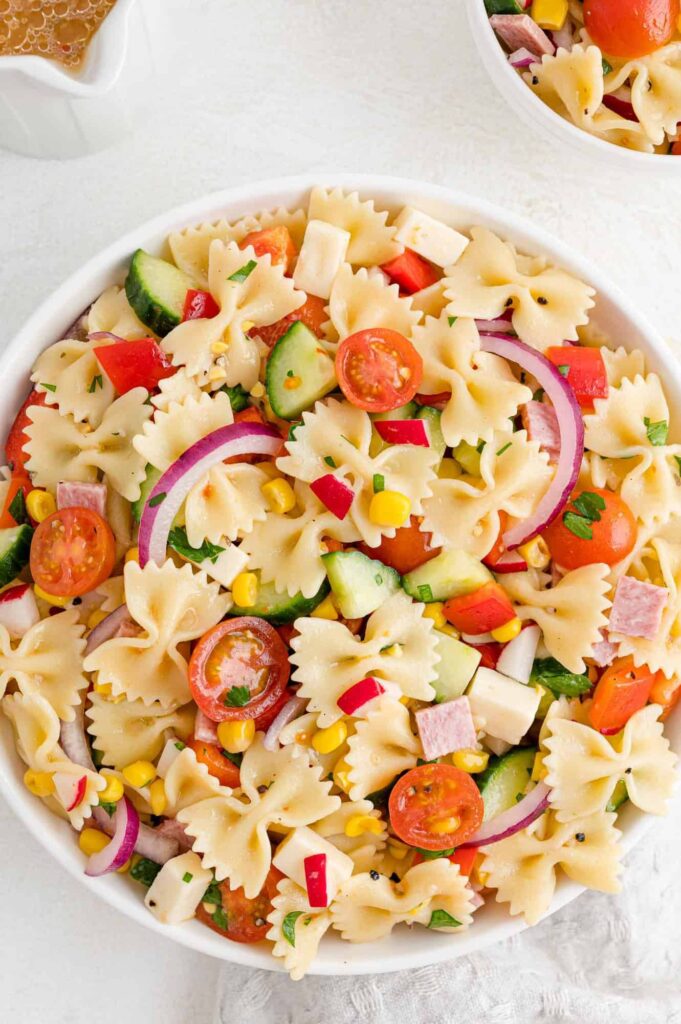
Step by Step — How to Build It Perfectly
Step one — make the dressing first. Whisk together all dressing ingredients in a large bowl — the bowl you will ultimately use to serve the salad. Making the dressing first ensures it is ready the moment the pasta is cooked and allows the garlic to mellow slightly in the acid while the pasta cooks.
Step two — cook the pasta. Generously salt the pasta water — it should taste like mild sea water. Under-salted pasta water is the most common reason pasta tastes bland. Cook the pasta two minutes less than the package instructions for al dente texture. Reserve half a cup of pasta water before draining — you may need it to loosen the dressing later.
Step three — dress the hot pasta immediately. Drain the pasta and add it directly to the bowl with the dressing while it is still hot. Do not rinse it under cold water — rinsing washes away the surface starch that helps dressing adhere and cools the pasta too quickly. Toss immediately and thoroughly to coat every piece of pasta in the dressing. Let it cool in the dressing, absorbing flavor as it comes to room temperature.
Step four — add the vegetables. Once the pasta has cooled to room temperature — approximately 15 minutes — add cherry tomatoes, cucumber, bell pepper, red onion, olives, sun-dried tomatoes, and artichoke hearts if using. Toss gently to combine.
Step five — taste and adjust. This is the most important step and the one most people rush or skip. Taste the salad at room temperature and adjust everything — more salt, more vinegar, more olive oil, more garlic. Get it tasting slightly bolder than you want it to be because chilling will mute the flavors. If the dressing feels tight or the pasta seems dry add a splash of reserved pasta water and toss again — the starchy pasta water loosens the dressing without diluting it.
Step six — chill. Cover and refrigerate for at least 30 minutes before serving — one hour is better. This resting time allows the flavors to meld and deepen significantly. The salad tastes noticeably better after 30 minutes of chilling than it does eaten immediately.
Step seven — finish before serving. Remove from the fridge. Add torn fresh basil and fresh mozzarella or feta. Taste one final time and adjust seasoning — the salad will likely need a small amount of additional salt and possibly a splash more olive oil after chilling as the pasta continues to absorb dressing as it sits. Toss gently and serve.
Make It a Complete Meal
This pasta salad works beautifully as a side dish but with a few additions becomes a complete, satisfying meal on its own.
Add grilled chicken — sliced grilled chicken breast tossed through the salad adds 30g+ protein per serving and makes this a proper lunch or dinner. Season the chicken with Italian herbs before grilling so it complements the dressing.
Add canned tuna — drained good quality tuna stirred through the salad creates a Mediterranean tuna pasta salad that is excellent, high protein, and requires zero additional cooking.
Add chickpeas — drained canned chickpeas add plant-based protein, fiber, and a hearty texture that makes the salad filling enough to eat as a standalone meal. They also absorb the dressing beautifully as the salad sits.
Add hard boiled eggs — halved or quartered hard boiled eggs add protein and a richness that makes the salad more substantial. Classic combination with pasta salad that works particularly well in the Italian-dressed version.
Variations to Keep It Interesting All Summer
Greek version — add feta instead of mozzarella, increase the Kalamata olives, add diced cucumber and tomato, and use a lemon-oregano dressing. Top with a sprinkle of za’atar before serving.
Caprese version — cherry tomatoes, fresh mozzarella, tons of fresh basil, and a balsamic glaze drizzled over the top. Simple, elegant, and incredibly good with high quality ingredients.
Italian antipasto version — add salami or pepperoni slices, roasted red peppers from a jar, pepperoncini, and provolone cheese cubed small. Bold, hearty, and deeply flavored.
Pesto version — replace the vinaigrette entirely with 4–5 tablespoons of good quality basil pesto thinned with a splash of olive oil and lemon juice. Toss hot pasta in pesto immediately after draining. Add cherry tomatoes, fresh mozzarella, and pine nuts. One of the most intensely flavored pasta salad variations possible.
Lemon arugula version — dress with a bright lemon vinaigrette and toss through a large handful of fresh arugula right before serving. The peppery arugula wilts slightly against the warm pasta and adds a sophisticated bitterness that balances the richness of the dressing beautifully.
High protein version — use chickpea pasta or lentil pasta instead of regular pasta for significantly more protein per serving. Add grilled chicken and chickpeas. Keep the same dressing and vegetables. Comes in at approximately 35g protein per serving.
Meal Prep and Storage Guide
Pasta salad is one of the best meal prep dishes in existence because it genuinely improves over the first 24 hours as the flavors meld and develop.
Make a large batch on Sunday — double or triple the recipe — and store in airtight containers in the fridge. Portion into individual containers for ready-to-go lunches all week.
One important note — the pasta continues to absorb dressing as it sits in the fridge. By day two the salad may seem slightly drier than when freshly made. Refresh it before eating with a small drizzle of olive oil and a splash of red wine vinegar — toss gently and the salad comes back to life immediately.
Add fresh herbs and cheese fresh each day rather than storing them in the salad — both deteriorate in quality over days and are much better added fresh to each serving.
Keeps well in the fridge for up to four days. Does not freeze.
Tips for Photographing This Salad for Pinterest
Pasta salad photographs beautifully with minimal effort because the variety of colors, textures, and shapes creates natural visual interest that requires very little styling.
Use a wide, shallow white bowl — it shows off the colors of the salad most dramatically and makes the portion look generous and abundant. A white background or white linen underneath the bowl keeps the focus entirely on the colorful salad.
Add a few extra cherry tomato halves and torn basil leaves on top right before shooting — these bright red and green elements draw the eye immediately and make the salad look fresher and more vibrant than the mixed version alone.
Drizzle a small amount of extra olive oil over the surface just before photographing — it creates a beautiful sheen on the pasta that looks glossy and appetizing in photos.
Shoot from directly above for the most visually interesting angle with pasta salad — the overhead view shows off the variety of ingredients and colors most effectively and is the format that performs best on Pinterest for food content.
Final Thoughts
The best summer pasta salad is not the most complicated one. It is not the one with the most ingredients or the most elaborate dressing. It is the one that uses fresh, quality produce, seasons everything properly, dresses the pasta hot, and gives the flavors time to come together before serving.
This is that pasta salad. The one that comes back with an empty bowl. The one people ask about. The one that earns a permanent place in your summer rotation from the first time you make it.
Twenty minutes. One pot. One bowl. All summer long. 🙂