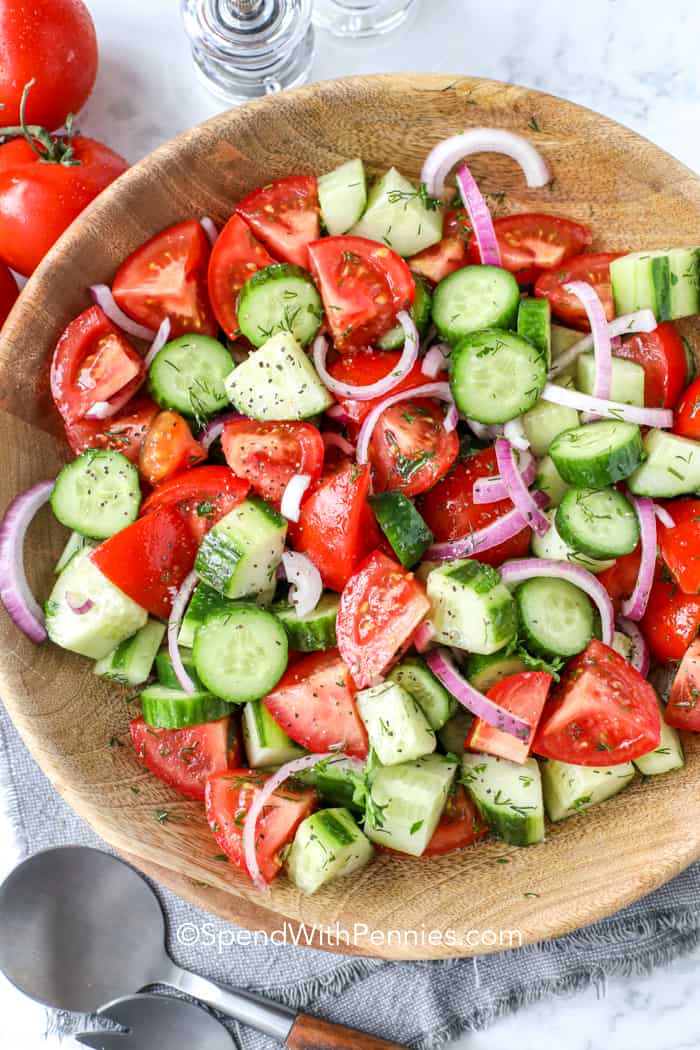
Sometimes the best recipes are the ones that barely feel like recipes at all.
No cooking. No complicated technique. No long ingredient list. Just fresh tomatoes, crisp cucumber, a simple dressing, and ten minutes of your time — and somehow the result is one of the most satisfying, refreshing things you can put on a summer table.
Tomato cucumber salad is the kind of dish that has been on family tables across the world for generations — in different versions, with different herbs, with different dressings — because it works everywhere, for everyone, every single time. It is the definition of a recipe that is greater than the sum of its parts.
Whether you need a quick side dish for a weeknight dinner, something to bring to a cookout, a light lunch that actually satisfies, or just a way to use up the tomatoes and cucumber sitting in your fridge before they go bad — this is the recipe you need. And you need it in ten minutes. 🙂
Why This Salad Is Having Such a Massive Moment Right Now
Tomato cucumber salad is up 1,500% in yearly search volume on Pinterest right now — and that number is not a typo. Fifteen hundred percent. The reason is not complicated — people are increasingly looking for recipes that are fast, fresh, require no heat, use minimal ingredients, and can be pulled together without any cooking skill whatsoever. This salad checks every single one of those boxes simultaneously and does it better than almost anything else in the no-cook recipe category.
For HerGlowDiary specifically this recipe is a high-opportunity article because it sits at the intersection of healthy eating, summer food, and effortless cooking — all three of which are core content pillars that perform consistently well with your audience. It is also an evergreen recipe that will drive search traffic long after the current trend peak — people will be searching for tomato cucumber salad recipes every summer for the foreseeable future.
What Makes a Great Tomato Cucumber Salad
The difference between a good tomato cucumber salad and a genuinely outstanding one comes down to three things — the quality of your produce, the dressing ratio, and one technique that most people skip that makes an enormous difference to the final result. More on that technique shortly.
The Produce Quality Is Everything
This salad has nowhere to hide mediocre ingredients. When your recipe is essentially two vegetables and a dressing, the quality of those vegetables determines the quality of the salad completely. Use the best tomatoes you can find — ideally vine-ripened, heirloom, or cherry tomatoes at peak summer ripeness. A tomato that smells intensely fragrant and gives slightly when pressed will make this salad taste extraordinary. A pale, flavorless supermarket tomato will make it taste like nothing regardless of what dressing you use.
The same principle applies to the cucumber. English cucumbers or Persian cucumbers are the best choices — thinner skin, fewer seeds, crisper texture, and more delicate flavor than standard cucumbers. Standard cucumbers work but peel them first and scoop out the seeds with a spoon — the seeds hold excess moisture that dilutes the dressing and makes the salad watery.
The Dressing Ratio Matters More Than You Think
The dressing for tomato cucumber salad is simple — olive oil, red wine vinegar or lemon juice, salt, pepper, and fresh herbs. The ratio that works best is approximately three parts olive oil to one part acid. This gives you a dressing that is bright and tangy without being mouth-puckeringly sour. Too much acid overwhelms the delicate flavor of the fresh vegetables. Too little and the salad tastes flat and oily. Three to one is the ratio — measure it at least the first time until you can eyeball it reliably.
The Salting Technique That Changes Everything
Here is the technique that most people skip and shouldn’t. Before making the salad — before adding any dressing — salt your sliced cucumber and tomatoes separately, toss gently, and let them sit for 10–15 minutes in a colander or on paper towels.
During those 15 minutes the salt draws out excess moisture from both vegetables through osmosis. You will be surprised how much liquid comes out — especially from the tomatoes. Drain or pat dry before assembling the salad.
Why does this matter so much? Because that excess moisture is what makes salads go watery and soggy within minutes of dressing them. Removing it before dressing means your salad stays crisp, the dressing stays concentrated and flavorful rather than being diluted, and the whole salad holds its texture for significantly longer. It is a 15 minute wait that makes the salad dramatically better — and it is the single most important technique in this entire recipe.
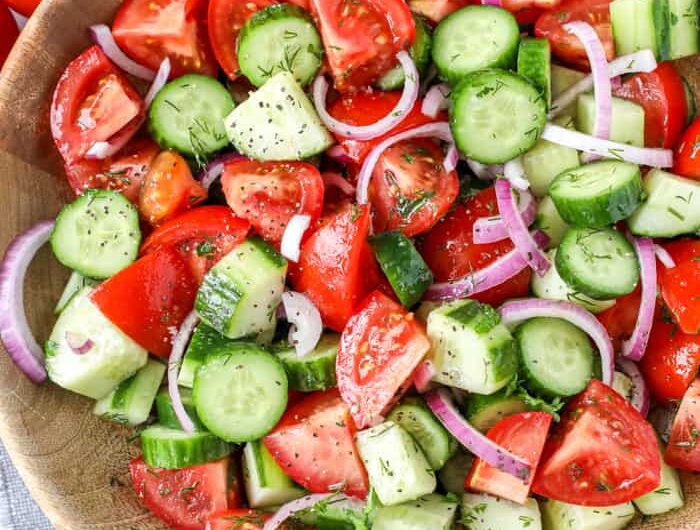
Tomato Cucumber Salad Recipe (10 Minutes, No Cook & Incredibly Refreshing)
Course: Sides, Salads, LunchCuisine: Mediterranean, AmericanDifficulty: Easy4
servings10
minutes15
minutes120
kcalIngredients
400g ripe tomatoes (cherry tomatoes halved or larger tomatoes cut into wedges)
1 large English or Persian cucumber, sliced into half moons
¼ red onion, very thinly sliced
Small handful fresh basil leaves, torn
Small handful fresh mint or parsley, roughly chopped
1 tsp salt (for the pre-salting step)
- for the dressing
3 tbsp good quality extra virgin olive oil
1 tbsp red wine vinegar or fresh lemon juice
½ tsp dried oregano
Salt and black pepper to taste
- Optional additions:
100g crumbled feta cheese
½ cup Kalamata olives
1 ripe avocado, diced
½ cup canned chickpeas, drained and rinsed
Directions
- Pre-salt the vegetables first — place sliced cucumber in a colander, sprinkle with ½ tsp salt, and toss gently. Do the same with the tomatoes in a separate bowl. Let both sit for 10–15 minutes. The salt will draw out excess moisture. After 15 minutes drain the cucumber thoroughly and pat the tomatoes gently with paper towel. This step prevents a watery salad and is non-negotiable for the best result.
- While vegetables are salting, prepare the dressing — add olive oil, red wine vinegar or lemon juice, dried oregano, salt, and black pepper directly to your serving bowl. Whisk together with a fork until combined. Taste and adjust the balance of oil to acid to your preference.
- Soak red onion slices in cold water for 10 minutes if you prefer a milder onion flavor. Drain and pat dry before adding to the salad.
- Add drained tomatoes, cucumber, and red onion to the bowl with the dressing. Toss gently to coat everything evenly — use clean hands or two large spoons and handle gently to avoid breaking the tomatoes.
- Taste immediately and adjust seasoning — more salt, more vinegar, or more olive oil as needed. Get the seasoning right before adding herbs.
- Add torn fresh basil and chopped mint or parsley. Toss very gently one final time.
- If adding feta, scatter over the top rather than tossing through. Add olives or avocado if using.
- Serve immediately for the crispest texture or let sit for 15–30 minutes for deeper, more melded flavor. Both are excellent — choose based on your preference and timing.
What Goes Into This Salad
Ripe tomatoes — the star of the whole dish. Use a mix of varieties if you can — cherry tomatoes halved, larger tomatoes cut into wedges or chunks. Different sizes and varieties create visual interest and flavor complexity. Heirloom tomatoes in different colors make this salad genuinely stunning to look at. At minimum use vine-ripened tomatoes — never the pale refrigerator tomatoes that have been stored cold and lost all their flavor. Cold storage destroys tomato flavor completely — always store tomatoes at room temperature and only refrigerate if they are about to go bad.
Cucumber — English or Persian cucumber sliced into half moons approximately 5mm thick. Thin enough to be delicate and easy to eat but thick enough to have satisfying crunch. If using standard cucumber peel the skin and remove the seeds before slicing. The skin of standard cucumbers can be tough and slightly bitter — removing it makes the salad more delicate and pleasant to eat.
Red onion — thinly sliced into half moons. Red onion adds a sharp, slightly pungent bite that cuts through the sweetness of the tomatoes and the mildness of the cucumber in exactly the right way. The key is slicing it paper thin — thick onion pieces are overwhelming and unpleasant. Use a mandoline if you have one for the thinnest, most even slices. If raw red onion is too sharp for your taste, soak the sliced onion in cold water for 10 minutes before adding to the salad — this removes much of the sharpness while keeping the flavor and color.
Fresh herbs — fresh herbs are what elevate this salad from basic to genuinely special. Fresh basil is the classic pairing with tomatoes — tear the leaves rather than chop them to avoid bruising and oxidation. Fresh mint adds a cooling quality that is particularly good in summer heat. Fresh dill gives an Eastern European character that works beautifully in the vinegar-dressed versions. Fresh parsley is the most neutral option that works well with any dressing variation. Use whichever herbs you love most or have available — a combination of two works particularly well.
Good quality olive oil — use the best extra virgin olive oil you have. In a salad with no cooking the olive oil flavor comes through directly and prominently. A grassy, peppery, high quality extra virgin olive oil makes this salad taste significantly better than a cheap, neutral vegetable oil. This is not the place to use the cooking oil.
Red wine vinegar or fresh lemon juice — the acid that brings everything together and makes the dressing bright and lively. Red wine vinegar gives a deeper, more complex tang. Fresh lemon juice gives a lighter, brighter citrus quality. Both are excellent — use whichever you prefer or have on hand. Fresh lemon only if using lemon — bottled lemon juice is flat and slightly bitter and not worth using in a simple fresh salad.
Salt and black pepper — season generously. Fresh vegetables need proper seasoning to taste their best. Taste the dressed salad before serving and adjust — it should taste vibrant and well-seasoned, not flat and undersalted.
Optional — feta cheese — crumbled feta takes this salad in a Greek direction and adds a salty, creamy element that pairs beautifully with the fresh vegetables and tangy dressing. If adding feta reduce the salt in the dressing slightly as feta is already quite salty. This addition transforms the salad from a simple side dish into something substantial enough to eat as a light lunch.
Optional — Kalamata olives — deepens the Mediterranean character and adds a meaty, briny element that makes the salad more filling and complex.
Optional — avocado — sliced or diced avocado adds creaminess and healthy fat that makes the salad more substantial. Add right before serving as avocado oxidizes quickly.
The Classic Dressing vs Variations
The Classic Simple Dressing — extra virgin olive oil, red wine vinegar, dried oregano, salt, and black pepper. This is the version that works everywhere and pleases everyone. Clean, bright, and lets the vegetables speak for themselves.
The Lemon Herb Dressing — fresh lemon juice, olive oil, fresh garlic minced very fine, fresh basil, fresh mint, salt, and pepper. Brighter and more aromatic than the classic version. Particularly good in hot weather when you want something that feels genuinely refreshing.
The Greek Dressing — olive oil, red wine vinegar, dried oregano, a small amount of Dijon mustard, garlic, salt, and pepper. The Dijon acts as an emulsifier and gives the dressing a slightly thicker, more cohesive consistency that coats the vegetables more evenly.
The Balsamic Version — olive oil and good quality balsamic vinegar instead of red wine vinegar. Sweeter and deeper in flavor. Particularly good with heirloom tomatoes of different colors — the dark balsamic dressing against colorful tomatoes looks stunning.
The Za’atar Version — olive oil, lemon juice, za’atar spice blend, salt, and pepper. Za’atar is a Middle Eastern spice blend of dried herbs, sesame seeds, and sumac that adds a complex, aromatic, slightly nutty flavor that is genuinely wonderful with fresh tomatoes and cucumber. Find it in Middle Eastern grocery stores or the international spice section.
How to Build the Salad Properly
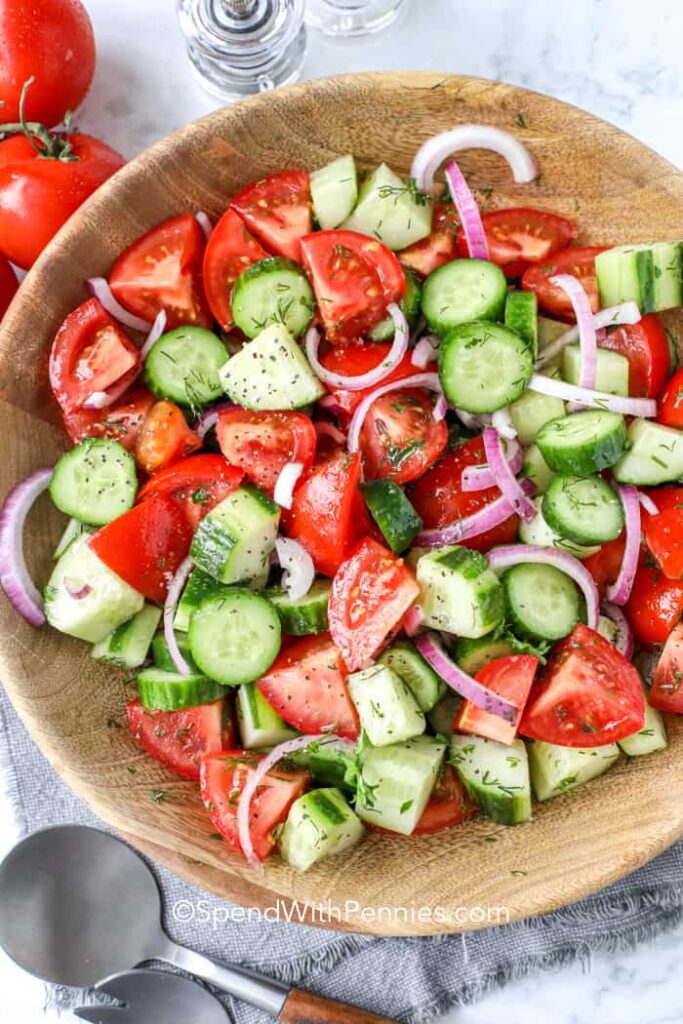
The assembly order and technique matters more than people realize for a salad this simple.
Start with the salting step — salt tomatoes and cucumber separately, let sit 10–15 minutes, drain thoroughly. This is non-negotiable for the best result.
Make the dressing in the bottom of your serving bowl first — add olive oil, vinegar or lemon juice, and seasoning directly to the bowl and whisk together with a fork. Making the dressing in the bowl rather than a separate container means one less thing to wash and ensures the dressing coats the vegetables immediately and evenly when you add them.
Add the drained tomatoes and cucumber to the bowl. Add red onion. Toss gently to coat everything in the dressing — use your hands or two large spoons and be gentle. You want everything coated without bruising the tomatoes or breaking them apart.
Taste immediately after tossing. This is your moment to adjust — more salt, more acid, more olive oil. Get it right before adding the fresh herbs.
Add fresh herbs last and toss very gently one more time. Fresh basil in particular bruises and oxidizes quickly — adding it last and handling it minimally keeps it bright green and fresh looking rather than brown and wilted.
If adding feta, scatter it over the top rather than tossing it through — feta breaks apart and becomes crumbly when tossed aggressively and distributes less attractively than when scattered on top.
When to Dress the Salad
This is one of the most commonly misunderstood aspects of fresh salads. The answer depends on what outcome you want.
Dress immediately before serving for the crispest, freshest texture and the most vibrant appearance. This is the best approach if you are serving the salad right away.
Dress 15–30 minutes before serving if you want the flavors to meld and deepen. The vegetables will release a small amount of additional moisture into the dressing creating a slightly more liquid, deeply flavored result that many people prefer. The texture softens slightly but the flavor improves noticeably.
Never dress hours in advance unless you have done the salting step first — without pre-salting, dressing too far in advance creates a watery, soggy salad that sits in a pool of diluted dressing and loses all its appealing texture.
What to Serve It With
Tomato cucumber salad is one of the most versatile side dishes in existence — it works with almost everything.
It is the perfect side for grilled chicken, grilled fish, grilled lamb, or any protein coming off a BBQ. The freshness and acidity of the salad cuts through the richness of grilled meat in exactly the right way. It works alongside pasta dishes as a fresh counterpoint to heavier sauces. It sits perfectly next to anything Middle Eastern — hummus, pita, falafel, grilled halloumi. It works as a light standalone lunch with a piece of good bread to soak up the dressing. It pairs beautifully with egg dishes — scrambled eggs, frittata, shakshuka — as a fresh, acidic side that brightens the whole plate.
Make It a Full Meal
With a few additions this side salad becomes a complete, satisfying lunch or light dinner.
Add canned chickpeas — drained and rinsed — for plant-based protein and fiber that makes the salad genuinely filling. Add grilled chicken breast sliced thin for a high protein lunch bowl situation. Add hard boiled eggs halved for a simple protein boost. Add good quality canned tuna for a Mediterranean tuna salad that is excellent with bread. Add burrata or fresh mozzarella torn into pieces for a version that sits somewhere between a tomato cucumber salad and a caprese and is one of the most satisfying things you can eat in summer.
Common Mistakes to Avoid
Skipping the salting step. The most impactful mistake on this list. Unsalted tomatoes and cucumber release all their moisture into the dressing the moment you dress the salad. Within ten minutes you have a watery pool at the bottom of your bowl and soggy vegetables floating in it. Salt first. Always.
Using cold tomatoes straight from the fridge. Cold storage destroys tomato flavor and texture. Always bring tomatoes to room temperature before using — at least 30 minutes on the counter. The flavor difference is dramatic.
Cutting everything too thick. Thick cucumber rounds are hard to eat elegantly and thick tomato chunks don’t absorb dressing evenly. Slice cucumber at 5mm and tomatoes at a similar size for the most pleasant eating experience.
Over-dressing. Fresh vegetables need enough dressing to coat them — not enough to swim in. Start with less than you think you need, toss, and add more if needed. You can always add dressing you can never remove it.
Using dried herbs instead of fresh. Dried herbs work in cooked dishes where heat activates their flavor. In a cold fresh salad dried herbs taste dusty and flat compared to fresh. Always use fresh herbs in this recipe.
Dressing too far in advance without pre-salting. Already covered above but worth repeating — this is the mistake that ruins more salads than any other. Salt first or dress at the last minute.
Storing Leftovers
Tomato cucumber salad is genuinely best eaten the day it is made — fresh, at its crispest, with the dressing bright and concentrated.
If you have leftovers store them in an airtight container in the fridge for up to two days. The texture will soften and the dressing will become more liquid as the vegetables continue to release moisture overnight — this is normal. The flavor actually deepens and becomes more complex overnight which many people prefer even if the texture is slightly less crisp.
Do not freeze — fresh salad does not freeze.
For meal prep — keep all components separate. Store sliced pre-salted cucumber and tomatoes separately from the dressing and herbs. Assemble fresh each day. This approach keeps everything at its best for up to three days.
Final Thoughts
Some recipes exist because someone had a moment of culinary genius. Tomato cucumber salad exists because someone had a ripe tomato, a fresh cucumber, some olive oil, and was hungry. And it turned out to be one of the best things they had ever eaten.
That is the magic of simple summer cooking done right. The best ingredients at their peak, treated with respect and minimal interference, always taste better than complicated food made from mediocre produce.
Ten minutes. Two vegetables. One bowl. One of the best things on your summer table.
Make it tonight. 🙂