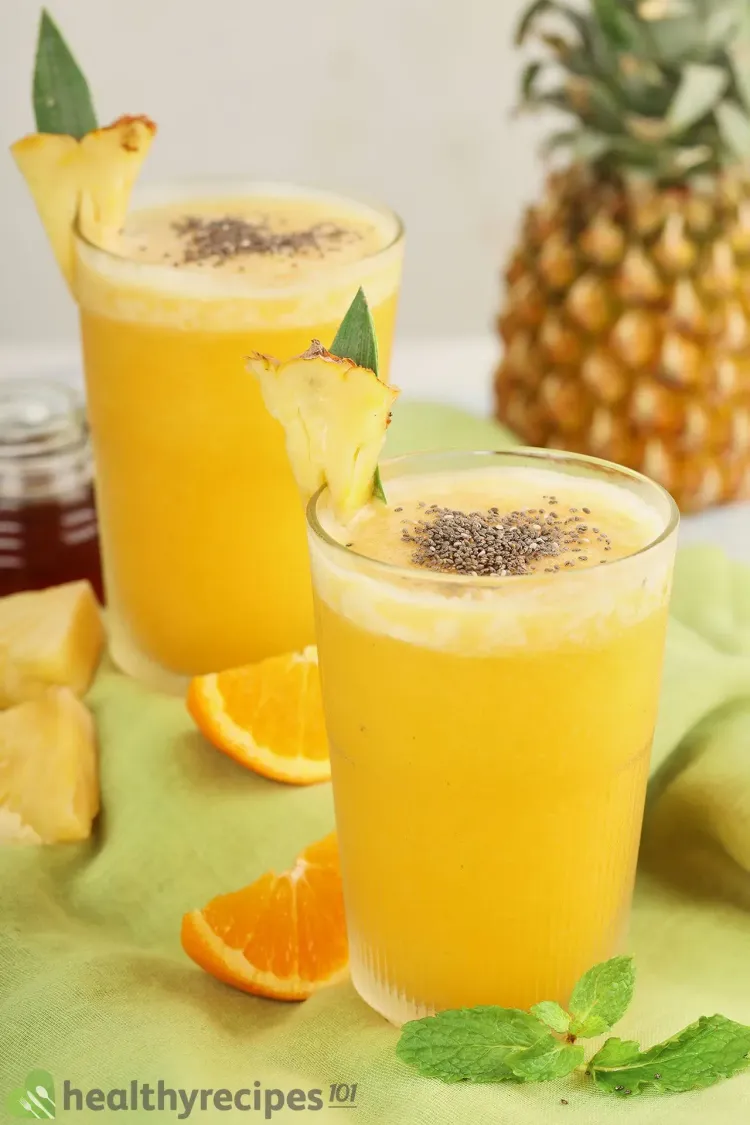
You know that uncomfortable, puffy, nothing-fits-right feeling after a big meal or a rough digestion day? Yeah. This smoothie is specifically designed to fix that.
The anti-bloating smoothie with ginger and pineapple is one of those recipes that actually does what it claims. Not in a gimmicky detox-tea way — in a real, science-backed, your-stomach-will-genuinely-feel-better way. It’s bright, tropical, slightly zingy from the ginger, and takes about 5 minutes to throw together.
Think of it as your stomach’s reset button in a glass. 🙂
Why This Smoothie Actually Works Against Bloating
Pineapple Contains Bromelain — and That’s a Big Deal
Pineapple isn’t just delicious — it contains an enzyme called bromelain that actively helps your body break down protein. When protein isn’t fully digested, it ferments in your gut and causes gas and bloating. Bromelain speeds up that digestion process, which means less fermentation, less gas, and a noticeably flatter stomach. This is not a wellness myth — bromelain is a well-studied digestive enzyme used in everything from meat tenderizers to digestive supplements.
Ginger Is One of the Most Powerful Anti-Bloating Ingredients on the Planet
Fresh ginger has been used for digestive issues for literally thousands of years and modern research backs it up completely. It speeds up gastric emptying — which basically means it helps food move through your stomach faster so it doesn’t sit there causing discomfort. It also relaxes the muscles of your intestinal tract, reducing cramping and that tight, uncomfortable pressure that comes with bloating. A small amount goes a long way and the flavor it adds to this smoothie is genuinely excellent.
Cucumber Reduces Water Retention
Bloating isn’t always gas — sometimes it’s water retention, especially around your midsection. Cucumber is naturally high in water content and contains compounds that act as a mild diuretic, helping your body flush out excess water. It also has anti-inflammatory properties that calm an irritated digestive system. The flavor is extremely mild so it blends in without affecting the tropical taste of the smoothie.
Coconut Water Restores Electrolyte Balance
When your electrolytes are off — especially potassium and sodium — your body holds onto excess water to compensate. That’s bloating. Coconut water is one of the most natural electrolyte sources you can find, with more potassium than a banana. It rebalances your system and helps your body release water it’s been holding unnecessarily. It also adds a subtle sweetness that works perfectly with the pineapple and ginger.
Mint Soothes Your Digestive Tract
Fresh mint contains menthol which relaxes the smooth muscle of your digestive tract. This is why peppermint tea is a classic remedy for an upset stomach — and why adding a few leaves of fresh mint to this smoothie isn’t just for flavor. It actively calms digestive spasms, reduces gas, and leaves your stomach feeling genuinely settled rather than tight and uncomfortable.
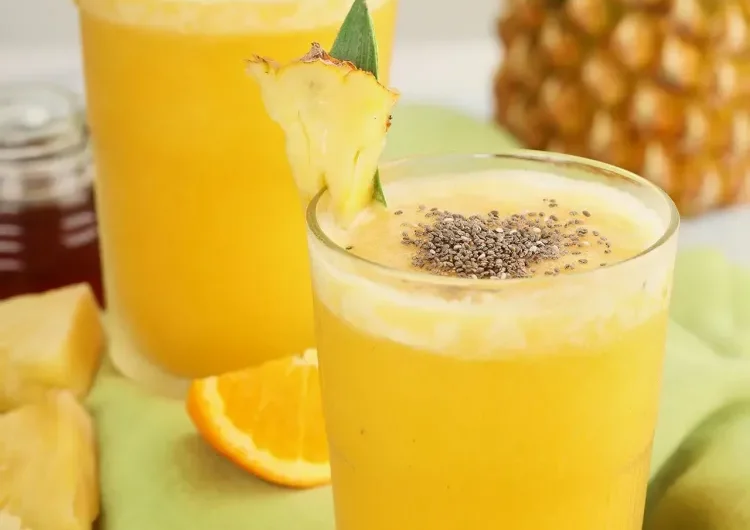
Anti-Bloating Smoothie with Ginger and Pineapple (Flat Belly in a Glass)
Course: Breakfast, DrinksCuisine: AmericanDifficulty: Easy1
servings5
minutes180
kcalIngredients
1 cup frozen pineapple chunks
1 piece fresh ginger (thumbnail-sized, peeled and roughly chopped)
½ medium cucumber, roughly chopped
8–10 fresh mint leaves
1 cup unsweetened coconut water
Juice of ½ fresh lemon
½ ripe banana (optional, for creaminess)
Small handful of spinach (optional, for extra nutrition)
3–4 ice cubes (optional)
Directions
- Add coconut water and lemon juice to the blender first.
- Add cucumber, mint leaves, and ginger.
- Add frozen pineapple and banana if using.
- Add spinach and ice cubes if using.
- Blend on high for 45–60 seconds until completely smooth. The cucumber and ginger need a proper blend — don’t rush it.
- Taste and adjust — add more ginger for extra zing, more lemon for brightness, or a small drizzle of honey if you want it sweeter.
- Pour into a glass and drink slowly over 10–15 minutes for best digestive results.
- Garnish with a mint sprig or pineapple slice if you’re photographing it for Pinterest — it looks stunning. 🙂
What Goes Into This Smoothie
Frozen pineapple — frozen is ideal here because it makes the smoothie cold and thick without needing much ice. Pineapple is the backbone of this recipe — tropical, sweet, and loaded with bromelain. Fresh pineapple works too but make sure it’s ripe for maximum sweetness and enzyme activity.
Fresh ginger — please use fresh, not ground ginger powder. The difference in flavor and potency is massive. Fresh ginger has a bright, slightly spicy, warming kick that ginger powder simply can’t replicate. Start with a small piece — about the size of your thumbnail — and add more to taste. Peel it with the back of a spoon before grating or chopping.
Cucumber — use about half a medium cucumber, roughly chopped. No need to peel it if the skin is thin. It adds volume, water content, and mild anti-bloating properties without changing the flavor of the smoothie at all.
Fresh mint leaves — a small handful, maybe 8–10 leaves. Adds a cooling, fresh quality to the smoothie that pairs beautifully with the ginger and pineapple. Don’t skip this — it makes the smoothie taste genuinely refreshing instead of just fruity.
Coconut water — use this as your liquid base instead of regular water or milk. It adds natural electrolytes and a subtle sweetness that ties everything together. If you don’t have coconut water, plain water works but you’ll lose some of the flavor complexity and electrolyte benefit.
Lemon juice — just half a lemon, squeezed fresh. Lemon stimulates the production of digestive enzymes in your liver and adds a bright, citrusy note that lifts the whole smoothie. It also acts as a natural preservative if you need to store the smoothie for a couple of hours.
Optional: banana — adds creaminess and natural sweetness if you want the smoothie a little thicker and more filling. It does add carbs so skip it if you’re watching sugar intake closely.
Optional: spinach — a small handful blends in completely flavor-wise and adds iron, folate, and magnesium. Magnesium in particular is excellent for reducing water retention and supporting gut motility.

When to Drink This Smoothie
Timing actually matters with this one more than with a regular breakfast smoothie.
First thing in the morning on an empty stomach is the most effective time — your digestive system is empty and the bromelain and ginger can go straight to work without competing with other food. This is especially good if you woke up feeling puffy or uncomfortable.
30 minutes before a heavy meal is another great option — the ginger primes your digestive system and the bromelain gets ready to help break down whatever you’re about to eat.
After a big meal when you’re already feeling bloated — it won’t work as instantly as a medication would but within 30–60 minutes most people notice a meaningful reduction in discomfort and tightness.
What you want to avoid is drinking it right after a meal — give your stomach at least 20–30 minutes before adding more volume to it.
Tips for Getting the Most Out of This Smoothie
Use fresh ginger every single time — the bromelain in pineapple and the gingerols in fresh ginger are both heat and age sensitive. Old dried out ginger root that’s been sitting in your fridge for two weeks is significantly less effective than a fresh piece.
Don’t add dairy — milk and yogurt can actually worsen bloating in some people, especially if there’s any lactose sensitivity involved. This smoothie is intentionally dairy-free for that reason. If you want a protein boost, add a tablespoon of hemp seeds instead — they’re easily digestible and won’t cause additional bloating.
Drink it slowly — gulping a cold smoothie fast introduces a lot of air into your digestive system, which is counterproductive when you’re trying to reduce bloating. Sip it over 10–15 minutes.
Chew it slightly — sounds strange for a smoothie but taking small sips and letting the liquid sit in your mouth for a second before swallowing activates salivary enzymes that start the digestion process before the smoothie even reaches your stomach.
Common Mistakes That Reduce the Effect
Using canned pineapple instead of fresh or frozen. Canned pineapple is heated during the canning process which destroys bromelain completely. You’d get the flavor but none of the digestive enzyme benefit. Always use fresh or frozen.
Adding too much ginger for a first try. Fresh ginger is potent. If you’re not used to it, start with a very small piece — about half a thumbnail — and work your way up. Too much ginger can actually irritate your stomach if you’re not accustomed to it.
Using flavored coconut water. Many store-bought coconut waters have added sugar and artificial flavoring. Check the label and buy plain, unsweetened coconut water only.
Drinking it ice cold straight from the freezer. Very cold drinks can actually slow digestion temporarily. Let the smoothie sit for 2–3 minutes after blending before drinking so it’s cold but not shockingly icy.
Adding lots of high-fiber extras. Chia seeds, flaxseeds, and large amounts of fibrous greens are generally healthy but adding too much fiber to an already bloating-prone stomach can make things worse in the short term. Keep this smoothie simple and light — that’s the whole point.
Variations to Mix It Up
Green detox version — add a large handful of spinach and a quarter of a green apple. More detoxifying, slightly less sweet, gorgeous deep green color.
Turmeric boost — add ¼ tsp of ground turmeric and a pinch of black pepper. Turmeric is a powerful anti-inflammatory that works synergistically with ginger to calm an irritated gut. The black pepper activates the turmeric significantly — don’t skip it.
Watermelon version — swap half the pineapple for frozen watermelon. Watermelon is extremely high in water content and has natural compounds that reduce water retention. The combination with ginger and mint is genuinely excellent.
Spicy kick version — add a tiny pinch of cayenne pepper. Sounds strange but cayenne actually stimulates digestive enzymes and speeds up gut motility. Starts as a tropical smoothie and finishes with a gentle warmth that’s oddly satisfying.
Coconut cream version — swap coconut water for coconut milk for a richer, creamier result. Higher in fat and calories but more filling and still completely dairy-free.
Final Thoughts
Bloating is uncomfortable, it’s frustrating, and it affects how you feel in your clothes and how you carry yourself through the day. This smoothie isn’t a magic cure — but it’s a genuinely effective, natural tool that addresses the actual causes of bloating rather than just masking the symptoms.
Five ingredients, five minutes, and your stomach will feel noticeably better within the hour. That’s a pretty good return on investment for a Tuesday morning.
Make it once when you’re feeling your worst and it will immediately become one of your most-reached-for recipes. 🙂