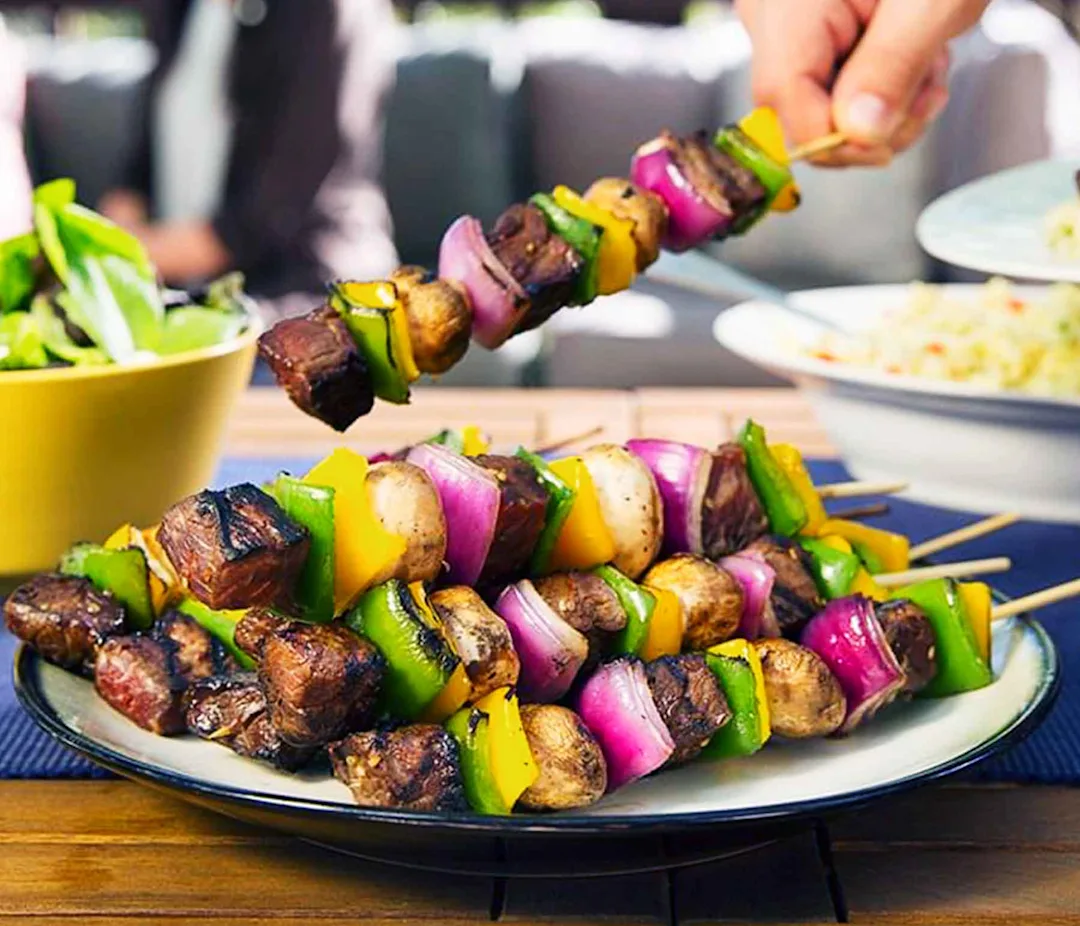
There is something about food on a stick that makes everything more fun.
Maybe it is the casual, hands-on way you eat it. Maybe it is the way everything caramelizes and gets slightly charred at the edges on a hot grill. Maybe it is just the fact that kabobs are genuinely one of the most satisfying, crowd-pleasing, endlessly customizable things you can make all summer long.
Whatever the reason — kabobs on the grill are the summer dinner that works for absolutely everything. Weeknight dinner when you do not want to think too hard. Cookout showstopper that feeds a crowd without stress. Meal prep protein that reheats beautifully all week. Date night dinner that looks impressive and takes thirty minutes.
Juicy marinated chicken. Colorful vegetables. A hot grill. Fifteen minutes of cooking. That is genuinely all this takes — and the result looks and tastes like you worked significantly harder than you did. 🙂
Why Kabobs Are the Ultimate Summer Dinner
Everything Cooks Perfectly at the Same Time
The genius of kabobs is that by cutting everything to a similar size you create a meal where protein and vegetables cook simultaneously on the same skewer in the same amount of time. No timing multiple pans and dishes to finish together. No trying to coordinate sides and mains. Everything comes off the grill together, already plated on the skewer, ready to eat.
The Marinade Does All the Flavor Work For You
A good marinade transforms ordinary chicken, beef, or shrimp into something deeply flavorful, juicy, and complex — and it does this while you are doing something else entirely. Thirty minutes of marinating produces a noticeable difference. Two hours produces an excellent result. Overnight produces genuinely outstanding kabobs where every piece of protein is seasoned all the way through rather than just on the surface.
They Are Endlessly Customizable for Any Dietary Need
Chicken kabobs for the high protein crowd. Shrimp kabobs for a lighter option. Beef kabobs for the cookout traditionalists. Halloumi and vegetable kabobs for vegetarians. Tofu kabobs for vegans. Every variation works on the same skewers with the same basic technique and the same vegetables — which means you can make kabobs that work for every person at the table simultaneously without making separate dishes for different dietary preferences.
They Photograph Beautifully for Pinterest
Colorful kabobs on a grill — or arranged on a serving board — are one of the most visually striking summer food presentations you can create. The alternating colors of red peppers, yellow squash, red onion, and golden-brown chicken or beef against the dark grill grates creates a natural visual rhythm that photographs spectacularly. This is exactly the kind of content that performs on Pinterest without any styling effort.
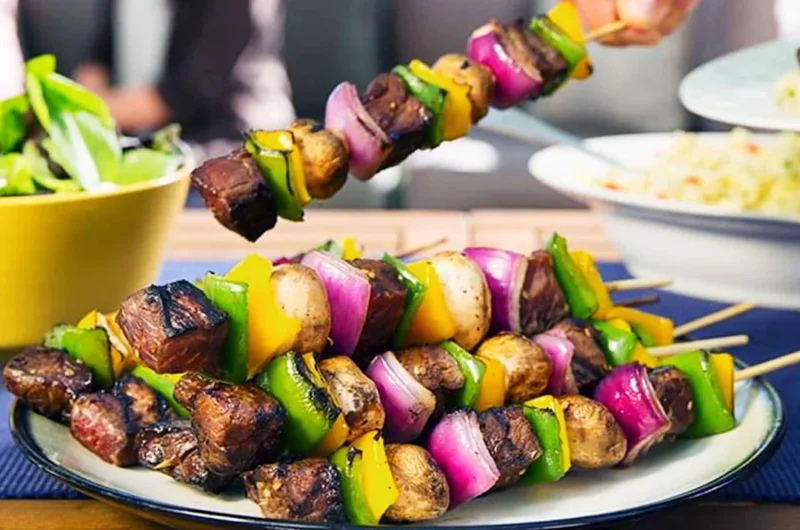
Kabobs on the Grill Recipe (Easy, Juicy & Perfect for Summer)
Course: Dinner, LunchCuisine: Mediterranean, AmericanDifficulty: Easy4
servings15
minutes2
hours320
kcalIngredients
700g boneless skinless chicken thighs, cut into 3–4cm cubes
2 large bell peppers (red and yellow), cut into 3–4cm squares
1 large red onion, cut into wedges and separated into 2–3 layer pieces
1 cup cherry tomatoes, whole
8–10 metal or soaked wooden skewers
- For the Mediterranean marinade:
4 tbsp extra virgin olive oil
Juice and zest of 1 lemon
4 cloves garlic, minced
1 tsp dried oregano
1 tsp fresh thyme leaves
1 tsp smoked paprika
1 tsp salt
½ tsp black pepper
- For serving:
Tzatziki or hummus
Warm pita or flatbread
Fresh lemon wedges
Fresh parsley, chopped
Directions
- Make the marinade — whisk together olive oil, lemon juice and zest, minced garlic, oregano, thyme, smoked paprika, salt, and black pepper in a bowl until fully combined. Taste and adjust seasoning.
- Reserve 3 tablespoons of marinade in a separate small bowl for basting — this is kept completely separate from the raw chicken.
- Place chicken cubes in a zip-lock bag or shallow dish. Pour remaining marinade over the chicken. Toss to coat every piece completely. Seal and refrigerate for minimum 30 minutes — 2 hours is strongly preferred. Overnight produces the best result.
- If using wooden skewers soak in water for at least 30 minutes while the chicken marinates.
- Remove chicken from fridge 20 minutes before grilling to take the chill off — cold protein straight from the fridge cooks unevenly on a hot grill.
- Preheat grill to medium-high heat for 10–15 minutes. Oil the grates thoroughly with a folded paper towel dipped in vegetable oil held with tongs.
- Thread skewers — alternate chicken, bell pepper, red onion, zucchini, and cherry tomatoes. Leave small gaps between each piece. Do not overcrowd. Aim for 4–5 pieces of chicken and 4–5 vegetable pieces per skewer.
- Place skewers on the preheated grill. Cook for 12–15 minutes total turning every 3–4 minutes. Each side should be golden-brown with slight char marks before turning.
- During the last 3–4 minutes of cooking brush reserved marinade over the kabobs using a pastry brush. Apply once, let caramelize for 2 minutes, apply again.
- Check doneness — chicken should reach 74°C internal temperature. The juices should run clear when pierced.
- Remove from grill and rest for 3–5 minutes before serving.
- Serve on skewers or slide contents off onto a plate over rice or couscous. Garnish with fresh parsley and lemon wedges. Serve tzatziki or hummus on the side.
Choosing Your Protein
The protein choice determines the marinade and the cooking time — everything else about the technique stays the same.
Chicken breast or thighs — the most popular choice and the one that works best for a crowd. Boneless skinless chicken thighs are significantly better than breast on kabobs — the higher fat content means they stay juicy and tender on the grill even if slightly overcooked, where breast can dry out quickly. Cut into 3–4cm cubes — uniform size ensures even cooking. Minimum marinating time is 30 minutes — 2 hours is better — overnight in the fridge is best.
Beef sirloin or tenderloin — the most flavorful option and the one that feels most indulgent. Cut into 3cm cubes. Beef kabobs benefit enormously from a bold, acidic marinade — balsamic vinegar, soy sauce, or red wine all help tenderize the meat and add deep flavor. Cook to medium-rare for the most tender, juicy result — medium at most. Overcooked beef kabobs become tough and chewy very quickly.
Shrimp — the fastest-cooking and most elegant option. Use large or jumbo shrimp, peeled and deveined, with the tails left on for visual appeal. Shrimp cook in 2–3 minutes per side — significantly faster than chicken or beef. Do not put shrimp on the same skewer as ingredients that need longer cooking times. The marinade needs only 15–20 minutes — shrimp absorbs flavor quickly and over-marinating in acidic marinades can start to cook the shrimp texture before it hits the grill.
Halloumi cheese — the best vegetarian option by far. Halloumi is a firm, salty cheese that holds its shape on the grill and develops a gorgeous golden crust without melting. Cut into 3cm cubes and marinate briefly in olive oil, lemon, and herbs. Pairs beautifully with cherry tomatoes, zucchini, and red onion. Grills in 2–3 minutes per side until golden and slightly crispy on the outside.
Tofu — use extra firm tofu only, pressed thoroughly to remove as much moisture as possible before marinating. Tofu needs longer marinating time than other proteins — 4 hours minimum, overnight preferred — to absorb flavor meaningfully. Press, marinate, and grill on a well-oiled grill to prevent sticking. The exterior becomes slightly crispy and the interior stays firm and flavorful.
Salmon — an underused kabob protein that is outstanding on the grill. Skin off, cut into 3–4cm cubes. The fat content in salmon keeps it moist even with direct grill heat. A simple lemon-herb or teriyaki marinade works beautifully. Cook 2–3 minutes per side — salmon overcooks very fast on a hot grill so watch carefully.
The Best Vegetables for Kabobs
The best kabob vegetables share one quality — they cook in approximately the same time as your protein so everything comes off the grill together perfectly. Here is exactly what works and what does not.
Bell peppers — the essential kabob vegetable. Red, orange, and yellow are sweeter and more flavorful than green. Cut into 3–4cm squares. They caramelize beautifully on the grill, becoming slightly charred at the edges and intensely sweet. The color variety of using multiple pepper colors creates the visually striking kabob that photographs so well.
Red onion — cut into wedges and separated into 2–3 layer pieces. Red onion becomes sweet and slightly charred on the grill — a completely different flavor from raw red onion. The char adds a pleasant bitterness that balances the sweetness of the peppers.
Zucchini — cut into rounds approximately 2cm thick. Grills quickly and develops beautiful grill marks. Absorbs the marinade well and has a mild flavor that works with every protein. Do not cut too thin — thin zucchini becomes mushy before it gets proper color.
Cherry tomatoes — the easiest kabob vegetable. Go on whole without any cutting. They burst on the grill releasing sweet, slightly smoky juice that drips onto everything below them on the skewer. Thread them carefully as they can split when skewered — go through the stem end and out the bottom gently.
Mushrooms — whole cremini or baby bella mushrooms thread easily and grill beautifully. They absorb the marinade deeply and release their juices on the grill creating little bursts of umami flavor. Clean with a damp cloth rather than washing — mushrooms absorb water which prevents them from browning properly on the grill.
Corn — cut corn cobs into 3cm rounds. Takes slightly longer to cook than other vegetables — place near the edges of the skewer where heat is slightly less intense. The sweetness of grilled corn alongside savory protein is excellent.
What to avoid — leafy greens burn immediately. Broccoli and cauliflower take too long and the outside burns before the inside cooks. Asparagus is too thin and falls off the skewer — grill it separately. Potatoes take far too long — parboil them first if you want to include them.
The Marinade — The Most Important Element
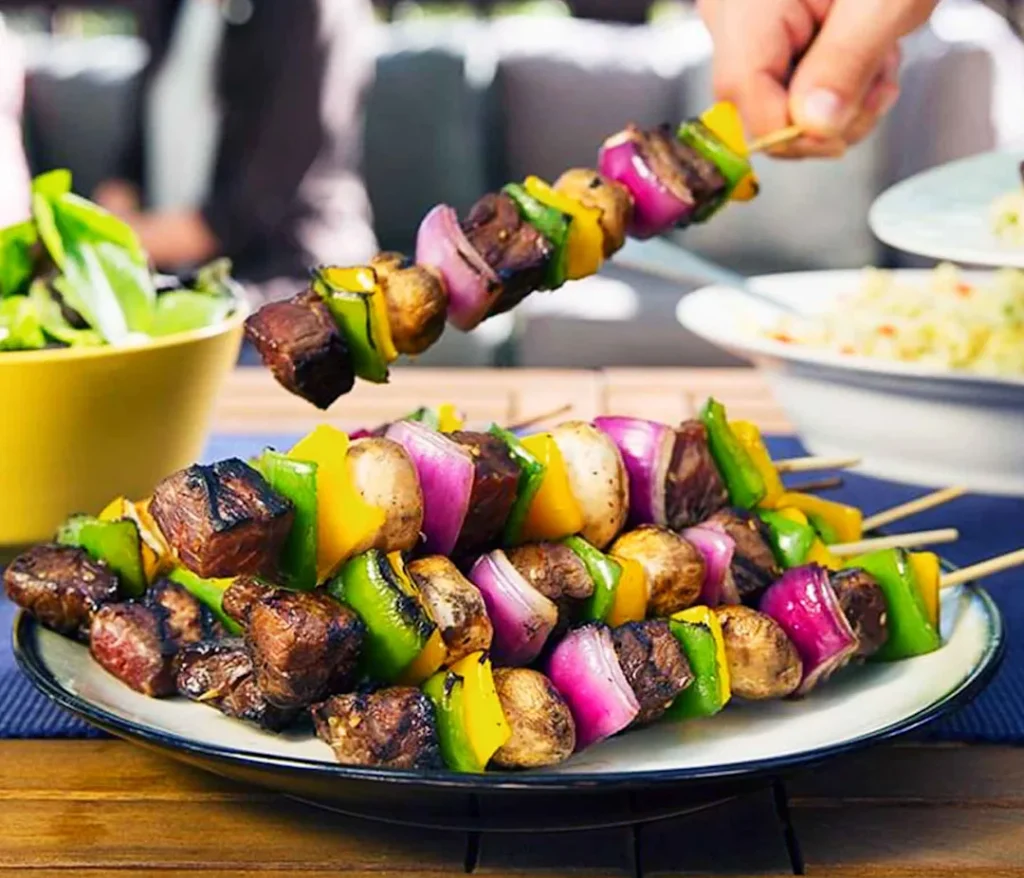
The marinade is what separates good kabobs from outstanding ones and it does three jobs simultaneously — it flavors the protein, it tenderizes it, and it protects it from drying out on the high heat of the grill.
Every effective marinade has four components:
Acid — breaks down muscle fibers making the protein more tender and helps the other flavors penetrate deeper. Citrus juice, vinegar, yogurt, and wine all work as acids. Do not over-acid — too much acid or too long marinating in a highly acidic marinade can make the surface of the protein slightly mushy rather than tender.
Fat — carries fat-soluble flavor compounds into the protein and protects against drying out on the grill. Olive oil is the most commonly used and works with every flavor profile.
Salt — draws moisture into the protein through osmosis and seasons it from the inside. Soy sauce, fish sauce, and regular salt all work. Salt is what makes the difference between protein that tastes seasoned all the way through and protein that tastes bland inside with a flavorful exterior only.
Aromatics and flavor — garlic, herbs, spices, and sauces that define the flavor profile of the kabob. This is where you customize based on the cuisine style you want.
Four Marinade Recipes for Every Occasion
Classic Mediterranean Marinade — olive oil, lemon juice, minced garlic, dried oregano, fresh thyme, salt, and black pepper. Clean, bright, and works beautifully with chicken, shrimp, halloumi, and vegetables. The lemon and oregano combination is the essential Mediterranean flavor that makes everything taste fresh and summery.
Bold Asian Marinade — soy sauce, sesame oil, fresh ginger, minced garlic, honey, rice wine vinegar, and a pinch of chili flakes. Rich, savory, slightly sweet with warmth from the ginger. Works exceptionally well with beef, chicken, and salmon. The honey caramelizes beautifully on the grill creating a slightly sticky, glossy coating.
Smoky BBQ Marinade — olive oil, smoked paprika, garlic powder, onion powder, cumin, a small amount of brown sugar, apple cider vinegar, and Worcestershire sauce. Bold, smoky, and deeply savory. The ultimate cookout kabob marinade that works with any protein. The brown sugar creates beautiful caramelization on the grill.
Lemon Herb Marinade — olive oil, fresh lemon zest and juice, minced garlic, fresh rosemary, fresh parsley, Dijon mustard, salt, and pepper. Bright, herby, and elegant. Particularly good with chicken, shrimp, and halloumi. The Dijon acts as an emulsifier that keeps the marinade cohesive and also adds a subtle complexity to the flavor.
The Skewer Question — Metal vs Wooden
Metal skewers are the practical long-term choice. Reusable, no soaking required, conduct heat which helps cook the interior of larger protein pieces, and flat or twisted designs prevent food from spinning when you rotate them. If you make kabobs more than once a summer invest in a set of flat metal skewers — they make every part of the process easier.
Wooden skewers are the accessible choice — available everywhere, inexpensive, and completely disposable. The critical requirement is soaking in water for at least 30 minutes before using — dry wooden skewers catch fire on a hot grill immediately. Soak them while your protein marinates and they are ready to use at the same time. Even soaked wooden skewers may char slightly at the exposed ends during grilling — this is normal and does not affect the food.
Double skewering — for larger pieces of protein or vegetables that tend to spin when you try to rotate them, thread onto two parallel skewers rather than one. This keeps everything flat and stable and makes turning the kabobs significantly easier without individual pieces spinning independently.
Threading the Skewers — The Right Way
The order and spacing of ingredients on the skewer affects both how evenly everything cooks and how the finished kabob looks.
Alternate protein and vegetables rather than clustering all the protein together and all the vegetables together. Alternating creates the visually striking colorful pattern that makes kabobs look so appealing and ensures the vegetables are exposed to the grill heat directly rather than being shielded by protein.
Leave small gaps between each piece — approximately 5mm. Pieces pressed tightly together trap steam between them which prevents the beautiful browning and caramelization you want. Small gaps allow heat to circulate around each piece individually.
Do not overcrowd the skewer. Four to five pieces of protein and four to five pieces of vegetable per skewer is enough. Overloaded skewers are difficult to turn, cook unevenly, and look messy rather than intentional.
Match the size of protein and vegetable pieces. If your chicken cubes are 3cm your pepper squares should be approximately 3cm. Mismatched sizes mean smaller pieces overcook before larger pieces are done.
Thread through the thickest part of each piece so ingredients are secured centrally on the skewer rather than hanging loosely at the ends where they might fall off.
Grilling — Temperature, Timing, and Technique
Preheat the grill thoroughly — at least 10–15 minutes on high heat before adding kabobs. A properly preheated grill creates immediate caramelization and grill marks when food hits the grates. A cold or insufficiently preheated grill causes food to steam rather than sear and stick to the grates.
Oil the grill grates right before adding kabobs — fold a paper towel, dip in vegetable oil, and use tongs to wipe over the grates. This prevents sticking which is the primary reason kabobs fall apart during turning.
Grill on medium-high heat — not maximum heat. Maximum heat burns the outside before the inside cooks through. Medium-high creates proper caramelization and browning while allowing enough time for the interior to cook fully.
Cooking times by protein:
- Chicken thigh cubes — 12–15 minutes total, turning every 3–4 minutes
- Chicken breast cubes — 10–12 minutes total, turning every 3 minutes
- Beef sirloin to medium-rare — 8–10 minutes total, turning every 2–3 minutes
- Shrimp — 4–6 minutes total, 2–3 minutes per side
- Halloumi — 4–6 minutes total, 2–3 minutes per side
- Salmon — 6–8 minutes total, 3–4 minutes per side
Turn kabobs only 2–3 times during cooking — not constantly. Each turn should reveal a golden-brown, slightly charred surface. If the kabob sticks when you try to turn it — leave it for another minute. Food releases naturally from the grill when it has developed a proper sear.
Check doneness with a thermometer for chicken — 74°C internal temperature. For beef cook to your preferred doneness. For shrimp they are done when they curl into a C shape and turn opaque — overcooked shrimp curl into an O shape and become rubbery.
Rest for 3–5 minutes after coming off the grill before serving. Resting allows juices to redistribute through the protein — cutting immediately loses that moisture onto the plate rather than keeping it in the meat.
The Basting Technique That Elevates Everything
Basting kabobs during the last few minutes of grilling with a reserved portion of the marinade — or a dedicated basting sauce — adds an additional layer of flavor and creates a glossy, caramelized coating that looks stunning and tastes even better.
The critical rule — never baste with marinade that has been in contact with raw protein. This is a food safety issue. Reserve a separate portion of the marinade before adding the raw protein to it, or make a fresh batch of sauce specifically for basting.
Apply the basting sauce during the last 3–4 minutes of grilling using a pastry brush. The sugars in the sauce caramelize on the hot grill surface creating a slightly sticky, deeply flavored glaze. Apply once, let it set for 2 minutes, apply again, then remove from the grill.
For the most impressive result — serve additional sauce on the side for dipping. The same sauce used for basting works perfectly as a dipping sauce and makes the presentation feel complete and restaurant-quality.
What to Serve With Kabobs
Fluffy white rice or herbed rice — the classic base that absorbs the kabob juices and dipping sauce beautifully. Make it more interesting by cooking the rice in chicken stock and stirring in fresh herbs and a squeeze of lemon after cooking.
Warm pita or flatbread — slide the kabob contents off the skewer directly into a warm pita with tzatziki, hummus, or garlic sauce for a wrap situation that is genuinely excellent.
Greek salad or tomato cucumber salad — the freshness and acidity of a simple salad is the perfect counterpoint to the richness of grilled protein. Already written on HerGlowDiary — reference it.
Tzatziki — thick Greek yogurt with cucumber, garlic, lemon, and fresh dill. The cooling, creamy quality of tzatziki alongside hot, slightly charred kabobs is one of the great summer flavor pairings. Takes five minutes to make and elevates the entire meal.
Couscous — cooks in five minutes by simply pouring boiling water over it and covering. Stir in olive oil, fresh herbs, lemon zest, and diced cucumber for a light, flavorful side that complements Mediterranean kabobs perfectly.
Hummus and roasted vegetables — spread hummus on a large plate, arrange kabobs on top, and finish with a drizzle of olive oil and fresh herbs. This platter-style presentation looks spectacular for entertaining.
Meal Prep and Storage
Kabobs are excellent for meal prep — the protein and vegetables keep well in the fridge and reheat without losing significant quality.
Marinate in advance — combine protein and marinade in a zip-lock bag and refrigerate for up to 24 hours. Thread skewers and grill when ready. This is the most practical approach for weeknight cooking — do the prep on Sunday and grill fresh throughout the week.
Store cooked kabobs in an airtight container in the fridge for up to 4 days. Slide protein and vegetables off the skewers before storing — they take up less space and are easier to reheat.
Reheat in a pan over medium heat with a small splash of water for 3–4 minutes or in the microwave covered for 90 seconds. The microwave is faster but the pan method preserves more of the original texture and caramelization.
Freeze cooked kabob protein only — vegetables do not freeze and thaw well and become mushy. Freeze cooked chicken or beef in airtight freezer bags for up to 3 months. Thaw overnight in the fridge and reheat as above.
Common Mistakes to Avoid
Not marinating long enough. Thirty minutes is the minimum — two hours produces noticeably better results and overnight is best for chicken and beef. Shrimp is the exception — 15–20 minutes is enough.
Skipping the grill preheat. A cold grill causes food to stick, steam instead of sear, and cook unevenly. Always preheat for 10–15 minutes minimum on high.
Forgetting to oil the grates. This is the primary cause of kabobs sticking and falling apart. Oil the grates right before adding the skewers — not at the start of preheating when the oil burns off before you cook.
Mixing proteins with very different cooking times on the same skewer. Chicken and shrimp on the same skewer means overcooked shrimp by the time the chicken is done. Keep proteins separate if they have significantly different cooking times.
Cutting pieces unevenly. Inconsistent sizes mean some pieces overcook before others are done. Take an extra two minutes to cut everything to the same size — it makes an enormous difference to the finished result.
Basting with raw marinade. Always reserve basting sauce separately before adding raw protein to the marinade. Using marinade that touched raw protein as a basting sauce in the final minutes of cooking is a food safety risk.
Turning too often. Let the kabob develop a proper sear before turning — this takes 3–4 minutes per side. Turning constantly prevents caramelization and causes sticking.
Variations for Every Occasion
Greek chicken kabobs — Mediterranean marinade, chicken thighs, red onion, cherry tomatoes, and bell peppers. Serve with tzatziki, warm pita, and a simple Greek salad. The most crowd-pleasing version for a summer cookout.
Teriyaki beef kabobs — Asian marinade with soy, ginger, and honey, beef sirloin, mushrooms, bell peppers, and pineapple chunks. The pineapple caramelizes on the grill and adds a tropical sweetness that pairs beautifully with the teriyaki beef.
Lemon garlic shrimp kabobs — lemon herb marinade, large shrimp, zucchini, cherry tomatoes, and red onion. Ready in under ten minutes of grilling. Serve over herbed couscous with extra lemon wedges.
Smoky BBQ chicken kabobs — BBQ marinade, chicken thighs, corn rounds, red onion, and bell peppers. The most appropriate cookout kabob for a crowd — bold, smoky, and deeply satisfying.
Halloumi and vegetable kabobs — Mediterranean marinade, halloumi, zucchini, cherry tomatoes, red onion, and bell peppers. The best vegetarian option and one that is genuinely satisfying rather than feeling like a compromise. Serve with hummus and warm flatbread.
Hawaiian chicken kabobs — teriyaki marinade, chicken breast, pineapple chunks, red onion, and red bell pepper. The combination of sweet pineapple, savory teriyaki chicken, and slightly charred onion is a genuine crowd pleaser that works particularly well for summer parties.
Final Thoughts
Kabobs are the summer dinner that proves great food does not have to be complicated. A good marinade, quality ingredients cut to the right size, a hot grill, and thirty minutes — that is genuinely all that stands between you and one of the most satisfying, crowd-pleasing, visually stunning meals of the summer.
Make them for a weeknight dinner and feel like you made something special. Make them for a cookout and watch them disappear before anything else on the grill. Make them for meal prep on Sunday and eat well all week without any additional cooking.
Thread them up. Fire up the grill. Come back in fifteen minutes to dinner that looks and tastes like summer at its absolute best. 🙂