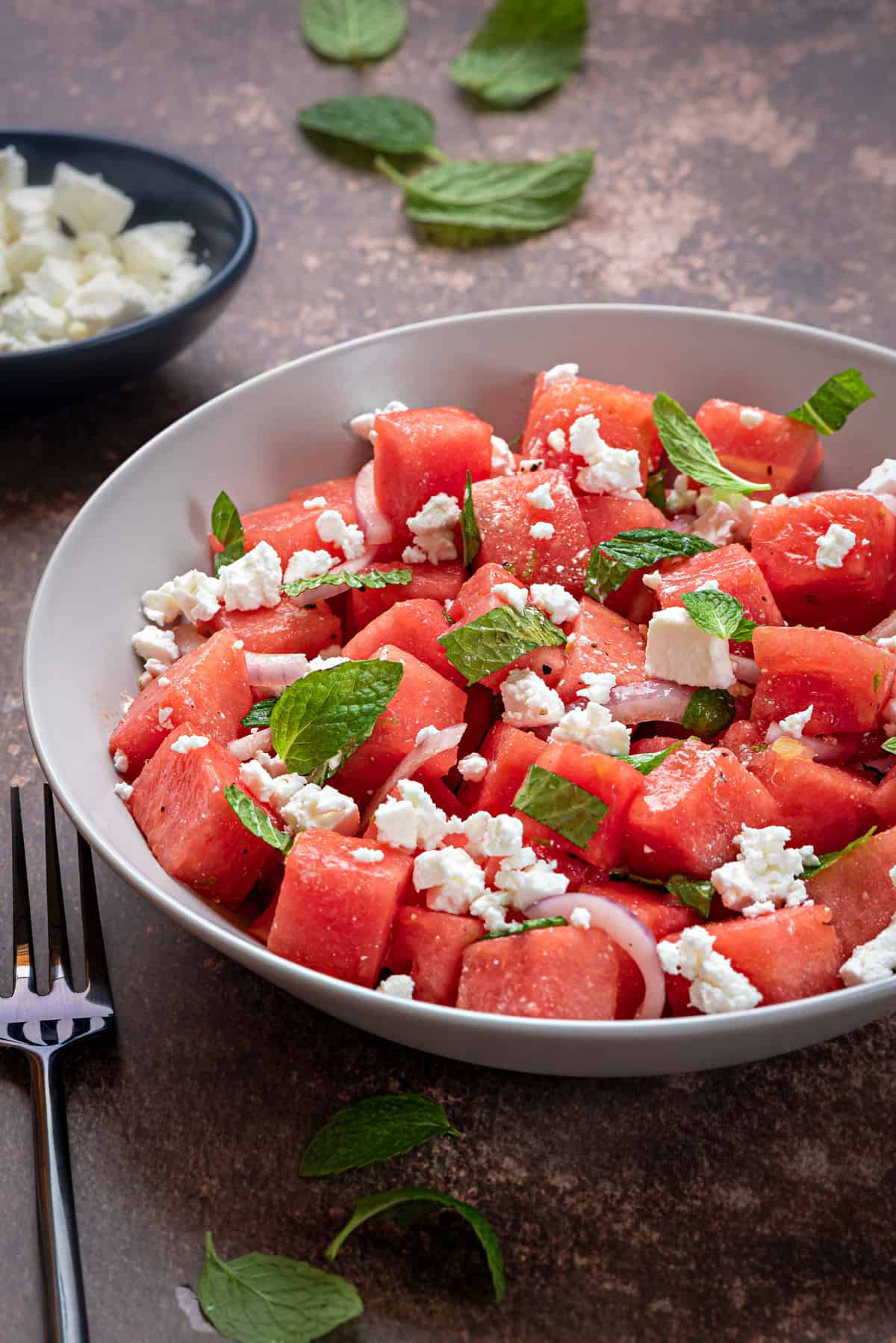
If there is one salad that perfectly captures everything summer is supposed to feel like — this is it.
Cold, juicy watermelon. Creamy, salty feta. Fresh mint. A drizzle of honey and lime. All of it together in a bowl that looks so beautiful you will want to photograph it before you eat it — and then eat it so fast you will immediately want to make another one.
Watermelon feta salad is one of those combinations that sounds unexpected the first time you hear it and makes complete, obvious sense the moment you taste it. Sweet and salty. Juicy and creamy. Cold and refreshing in a way that no other summer salad quite achieves. It has been showing up at every summer gathering, cookout, and backyard dinner for good reason — it is genuinely one of the best things you can put on a summer table.
Ten minutes. No cooking. Zero effort. Maximum impression.
This is the summer salad everyone needs in their life right now. 🙂
Why Watermelon and Feta Work So Perfectly Together
Sweet and Salty Is One of the Great Flavor Combinations
The pairing of watermelon and feta is not an accident or a trend — it is food science. Sweet and salty flavors enhance each other in a way that makes both taste more intense and satisfying than either does alone. The saltiness of the feta makes the watermelon taste sweeter and more vivid. The sweetness of the watermelon makes the feta taste less sharp and more creamy and pleasant. Together they create a flavor balance that is genuinely addictive — one bite leads immediately to another in a way that is hard to stop.
The Texture Contrast Is As Important As the Flavor
Great salads are about texture as much as flavor and this one nails both. The watermelon is cold, juicy, and slightly firm — it releases a burst of sweet liquid with every bite. The feta is dense, creamy, and slightly crumbly — it clings to the watermelon and melts slightly against the cold fruit. Fresh mint adds a delicate, slightly crisp texture that provides a third layer of contrast. The combination of these three distinct textures in every forkful is part of what makes this salad so satisfying to eat.
It Is the Most Refreshing Thing You Can Eat in Summer Heat
Watermelon is approximately 92% water. Eating it on a hot day is genuinely hydrating in a way that most foods are not. Combined with the cooling quality of fresh mint — menthol in mint creates a physical cooling sensation — and the brightness of fresh lime juice, this salad tastes and feels like the most refreshing thing possible on the hottest days of the year. It is the salad equivalent of jumping into a cold pool.
Choosing the Best Watermelon
The watermelon is 80% of this salad and its quality determines the quality of everything else. Here is exactly how to choose the best one.
The thump test — knock on the watermelon with your knuckle. A ripe watermelon sounds hollow and deep — like knocking on a drum. An underripe watermelon sounds dense and dull. The hollow sound indicates the flesh has separated from the rind as it ripened creating air pockets — a sign of peak ripeness and maximum sweetness.
The field spot — turn the watermelon over and look for the field spot — the patch where it rested on the ground during growing. A ripe watermelon has a creamy yellow or orange field spot. A white or pale green field spot means it was picked too early before it had time to fully ripen and sweeten on the vine.
The weight — pick up two watermelons of similar size and choose the heavier one. Heavier watermelon means more water content which means juicier, sweeter flesh. A light watermelon for its size has less moisture and is typically less flavorful.
The shape — choose a symmetrical watermelon without irregular bumps or indentations. Bumps and irregular shapes can indicate uneven growing conditions that affect flavor consistency through the flesh.
At the store — if buying pre-cut watermelon look for deep red flesh with no white streaking or pale patches close to the rind. The flesh should look moist and vibrant — not dry or grainy. Seeds should be dark black — not white or pale which indicates underripeness.
What Goes Into This Salad
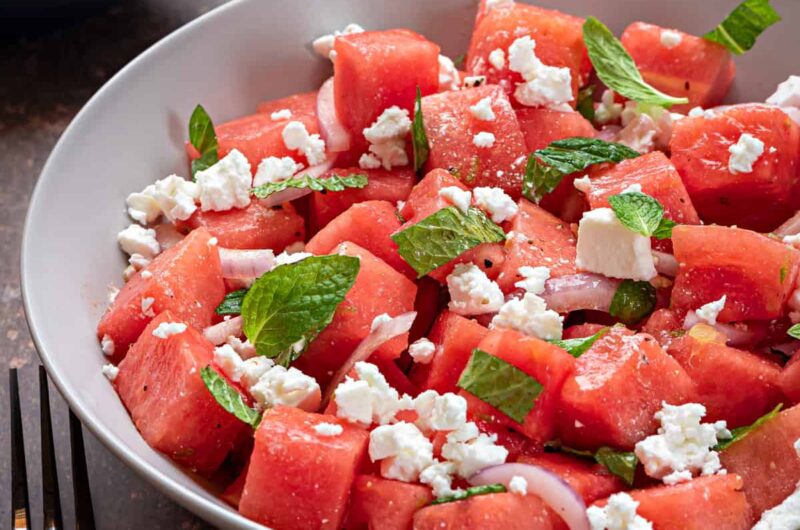
Watermelon Feta Salad Recipe (Fresh, Easy & Summer’s Prettiest Side Dish)
Course: Sides, SaladsCuisine: Mediterranean, AmericanDifficulty: Easy4
servings10
minutes10
minutes180
kcalIngredients
6 cups fresh watermelon, cut into triangles or cubes (approximately half a small watermelon)
150g block feta cheese, crumbled into irregular pieces
Small handful fresh mint leaves, larger ones torn
Juice of ½ fresh lime
1 tsp good quality honey
1 tsp extra virgin olive oil
Pinch of flaky sea salt
Freshly cracked black pepper to taste
Directions
- Cut watermelon into your preferred shape — triangles, cubes, or melon balls. Remove any seeds as you go. Pat cut surfaces very gently with paper towel to remove excess surface moisture — this helps the dressing adhere rather than sliding off wet watermelon.
- Arrange watermelon on a large serving plate or in a wide shallow bowl. If using cucumber or arugula add these now as the base or alongside the watermelon.
- Scatter crumbled feta evenly over the watermelon — aim for a mix of larger chunks and fine crumbles for the most interesting texture. Do not toss — scatter deliberately so the feta stays visible on top.
- Squeeze fresh lime juice evenly over the entire salad. This is your first layer of dressing and it goes directly onto the watermelon and feta.
- Drizzle honey lightly over the top — use a slow circular motion so it distributes evenly rather than pooling in one spot.
- Drizzle olive oil lightly over everything.
- Scatter fresh mint leaves over the top — torn larger leaves, whole smaller ones. Add red onion if using.
- Finish with a pinch of flaky sea salt scattered over the watermelon specifically and freshly cracked black pepper to taste.
- Add any optional toppings — pistachios, balsamic glaze, Tajín, or prosciutto — immediately before serving.
- Serve immediately. This salad is at its absolute best within 10–15 minutes of assembly. Do not refrigerate once assembled
Watermelon — the star. Cut into triangles, cubes, or use a melon baller for rounds depending on the presentation you want. Triangles are the most visually striking and easiest to eat. Cubes are the most practical for a large batch. Melon balls look the most elegant for a dinner party presentation. Remove seeds as you go or buy seedless — seeds in a salad are an annoying interruption to an otherwise perfect eating experience.
Feta cheese — the ingredient that makes this salad special. Use block feta packed in brine rather than pre-crumbled feta from a bag. Block feta is significantly creamier, more flavorful, and less dry than pre-crumbled. The brine it is packed in keeps it moist and preserves its tangy, complex flavor. Crumble it yourself with your fingers into irregular pieces — some larger chunks and some fine crumbles creates a more interesting texture distribution than uniform small pieces.
Fresh mint — non-negotiable. Dried mint is not a substitute — it tastes completely different and does not provide the fresh, cooling, aromatic quality that makes this salad taste summery and bright. Use the freshest mint you can find — leaves should be vivid green with no browning or wilting. Tear larger leaves rather than chopping to prevent oxidation and bruising that turns mint black. Smaller leaves can go in whole.
Fresh lime juice — a squeeze of fresh lime over the assembled salad immediately before serving. The acidity brightens every flavor in the bowl and adds a citrusy sharpness that ties the sweet watermelon and salty feta together. Fresh lime only — bottled juice is flat and slightly bitter and will not give you the bright, clean citrus hit that fresh lime provides.
Honey — a light drizzle over the top just before serving. The honey adds another layer of sweetness that amplifies the watermelon flavor and creates a beautiful glossy finish on the salad that photographs spectacularly. Use a good quality runny honey — dark, thick honey is harder to drizzle evenly and can overwhelm the delicate flavors.
Extra virgin olive oil — a small drizzle that adds richness and helps carry the flavors of the mint and lime across the entire salad. Use the best quality olive oil you have — in a raw application like this the flavor comes through directly and a grassy, peppery olive oil adds a sophistication that neutral oil cannot.
Flaky sea salt — a small pinch scattered over the top just before serving. Even though the feta is already salty a small additional pinch of flaky sea salt on the watermelon specifically amplifies the sweetness dramatically. Flaky salt rather than fine salt — the larger flakes add occasional bursts of saltiness rather than an even background saltiness throughout.
Black pepper — freshly cracked, used sparingly. A small amount of black pepper adds a subtle warmth and complexity that makes the dressing feel more complete. Use freshly cracked rather than pre-ground for the most aromatic result.
Optional — cucumber — thinly sliced or diced English cucumber adds additional freshness and crunch that complements the watermelon texture beautifully. Cucumber and watermelon are both high in water content and the combination is extraordinarily refreshing.
Optional — red onion — very thinly sliced red onion adds a sharp, pungent element that cuts through the sweetness and richness of the other ingredients. Use sparingly and soak in cold water for ten minutes first to mellow the sharpness. Not everyone loves red onion in this salad — leave it out if you are serving guests with unknown preferences.
Optional — arugula — a small handful of fresh arugula underneath or tossed through the salad adds a peppery bitterness that contrasts beautifully with the sweet watermelon and salty feta. It also makes the salad more substantial and adds a sophisticated quality that elevates it from side dish to starter.
Optional — balsamic glaze — a drizzle of thick balsamic glaze instead of or in addition to honey. The sweet, syrupy balsamic adds depth and a striking visual contrast against the red watermelon and white feta. This variation is particularly popular and photographs beautifully.
How to Cut Watermelon for the Best Presentation
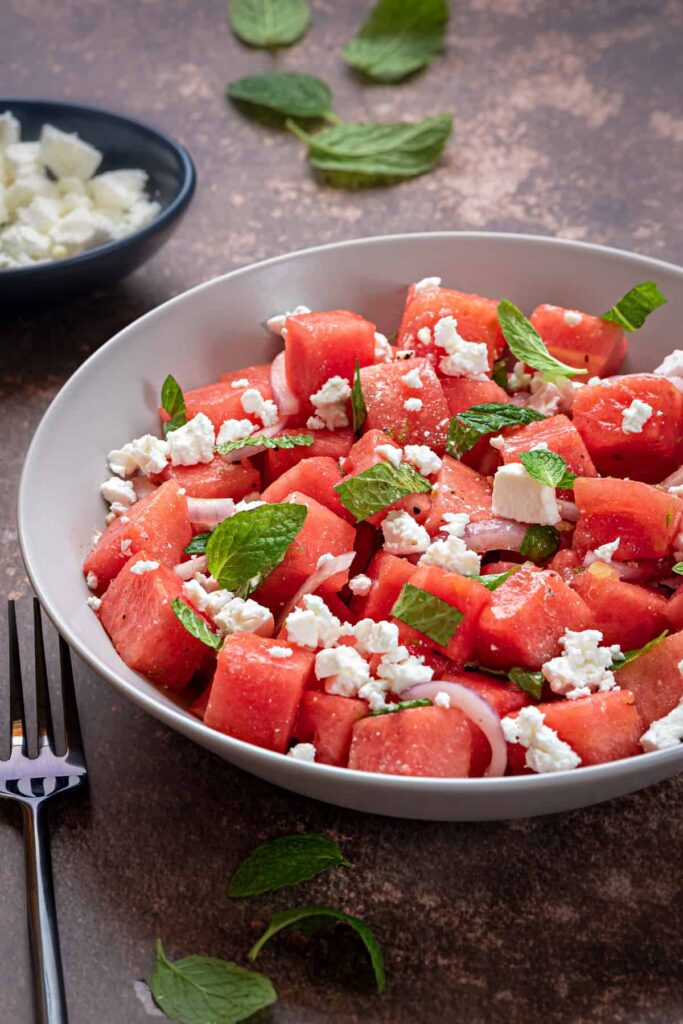
The way you cut the watermelon significantly affects how the finished salad looks — and this salad is very much about how it looks as well as how it tastes.
Triangle slices — cut the watermelon into rounds about 3cm thick then cut each round into triangles. The triangular shape is the most visually striking and makes the salad look like something from a restaurant. Easy to eat by hand or with a fork and the shape creates natural pockets that catch the feta and mint.
Cubes — cut into approximately 3cm cubes. The most practical shape for a large batch and for mixing all ingredients evenly. Less visually dramatic than triangles but more consistent and easier to eat with a fork in a salad context.
Melon balls — use a melon baller to scoop perfect spheres from the watermelon flesh. The most elegant presentation for a dinner party or when you want the salad to look genuinely impressive. Takes more time than cubing but the result looks professional and beautiful.
Thick slabs — for an alternative platter-style presentation cut watermelon into thick rectangular slabs and arrange on a large serving board. Scatter feta, mint, and toppings over the slabs. Drizzle dressing over everything. This format looks spectacular for entertaining and requires almost no prep beyond slicing.
The Dressing — Simple and Perfect
This salad needs the lightest possible hand with dressing — the watermelon provides most of the moisture and flavor and over-dressing is the fastest way to make it taste muddled rather than fresh and vibrant.
The dressing is not a pre-made mixture — it is a series of individual additions applied directly to the assembled salad in the right order. Fresh lime juice first — it brightens everything underneath it. Honey drizzled next — it adds sweetness and gloss. Olive oil last — it carries all the flavors together and adds richness. Flaky salt and black pepper scattered over the very top.
This order matters. Lime juice applied first seasons the watermelon directly. Honey drizzled over absorbs slightly into the watermelon surface. Olive oil drizzled last creates a light coating that pulls everything together without making the salad feel dressed or heavy.
The total amount of dressing is minimal — this is intentional. Juice of half a lime, one teaspoon of honey, one teaspoon of olive oil for a medium salad serving four. The watermelon provides all the moisture the salad needs. The dressing provides flavor enhancement only.
The Timing Rule That Most People Get Wrong
Watermelon releases moisture — a lot of it — as soon as it is cut and especially once it is dressed. A watermelon feta salad assembled and dressed thirty minutes before serving will be sitting in a pool of pink watermelon liquid by the time it reaches the table. The feta will have softened and partially dissolved. The mint will have wilted. The whole thing looks and tastes significantly less appealing than a freshly assembled version.
The solution is simple — assemble this salad as late as possible before serving. Ideally within ten to fifteen minutes of eating. Cut the watermelon in advance and keep refrigerated. Have all other components ready. Assemble, dress, and garnish immediately before serving.
If you absolutely must assemble in advance — keep the dressing separate and apply it right before serving. The undressed salad can sit assembled for up to thirty minutes without significant moisture loss. Dressed, it starts to deteriorate within fifteen minutes.
For a party or gathering — set up everything in advance but assemble the salad on the table right before guests serve themselves. The ten second assembly in front of people actually adds to the drama and freshness of the dish.
Variations to Try All Summer
Watermelon feta mint with balsamic glaze — replace honey with a drizzle of thick balsamic reduction. The dark balsamic against the red watermelon and white feta creates a stunning visual and the sweet, acidic balsamic adds depth that honey alone does not. This is the most photographed version on Pinterest for good reason.
Watermelon cucumber feta salad — add thinly sliced English cucumber for extra crunch and freshness. The cucumber and watermelon combination is extraordinarily refreshing and makes the salad more substantial. Add a small amount of fresh dill alongside the mint for an herby complexity.
Watermelon feta arugula salad — toss fresh arugula through the salad or use it as a base. The peppery bitterness of arugula contrasts beautifully with the sweet watermelon and salty feta and makes this a proper starter rather than just a side dish.
Spicy watermelon feta salad — add a pinch of Tajín or a very light sprinkle of chili flakes over the top before serving. The subtle heat amplifies the sweetness of the watermelon dramatically and adds a complexity that makes this version genuinely addictive. This is the variation that surprises people most and impresses them most.
Watermelon feta with pistachios — scatter a small handful of roughly crushed pistachios over the top just before serving. The green of the pistachios against the red watermelon and white feta is one of the most visually striking color combinations in food and the nutty crunch adds a textural dimension that makes the salad feel more complete.
Watermelon prosciutto feta salad — drape thin slices of prosciutto over the watermelon before adding feta and mint. Prosciutto and watermelon is another classic sweet-salty pairing that works beautifully alongside feta. This version is substantial enough to serve as a starter at a dinner party.
Grilled watermelon version — cut watermelon into thick slabs and grill on a hot grill for two minutes per side until grill marks appear and the surface caramelizes slightly. The grilling concentrates the sweetness and adds a subtle smokiness that creates a completely different and more complex flavor profile. Top with feta, mint, and honey immediately after grilling while the watermelon is still warm. The contrast of warm, slightly smoky watermelon with cold creamy feta is genuinely outstanding.
Making It Look Beautiful for Pinterest
Watermelon feta salad is one of the most naturally photogenic dishes you can make — the color combination of deep red watermelon, bright white feta, and vivid green mint against a simple white or marble background is visually striking without any styling effort.
Use a white serving plate or board for maximum color contrast. The red, white, and green elements of this salad pop dramatically against a white background and look flat and less appealing against dark surfaces.
Do not toss the salad — arrange it. Place watermelon pieces in a single overlapping layer. Scatter feta crumbles over the top rather than mixing through. Place mint leaves deliberately rather than tossing. Drizzle honey and olive oil visibly. The arranged version photographs infinitely better than a tossed version.
Keep a few perfect mint leaves back specifically for the top of the photo. Full, unblemished, vivid green mint leaves placed on top of the assembled salad right before shooting — not wilted or bruised ones from the bottom of the bunch.
Add a lime half to the frame — a cut lime placed at the edge of the plate adds context, color, and a professional food photography detail that costs nothing and improves every shot.
Shoot immediately after assembling — before the watermelon starts releasing juice. The salad looks best in the first five minutes after assembly when everything is fresh and the plate is clean. Waiting too long creates a pink juice pool around the watermelon that looks messy in photos.
Natural window light always for this salad — the red of watermelon looks vivid and appetizing in natural light and slightly dull under artificial lighting.
What to Serve It With
Watermelon feta salad works alongside almost everything on a summer table but it particularly excels in certain pairings.
Grilled chicken — the freshness and acidity of the salad cuts through the richness of grilled meat perfectly. Serve alongside grilled chicken breast or chicken thighs for a complete summer meal that feels light and balanced.
Grilled fish — particularly salmon or sea bass. The sweet watermelon and salty feta complement the richness of grilled fish in an excellent way. This combination feels genuinely restaurant-quality with minimal effort.
Pulled pork or BBQ — the sweet, fresh, acidic salad is a perfect counterpoint to rich, smoky BBQ flavors. One of the best side dishes for a summer cookout specifically because it provides freshness and acidity that cuts through the richness of BBQ meats.
Hummus and flatbread spread — serve as part of a mezze-style spread alongside hummus, flatbread, olives, and other Mediterranean-inspired dishes. The feta in the salad connects it naturally to a Mediterranean spread.
As a standalone lunch — with a slice of good bread to mop up the juices that accumulate on the plate. Simple, satisfying, and genuinely complete as a light summer lunch on its own.
Common Mistakes to Avoid
Assembling too far in advance. Watermelon releases moisture quickly once cut and dressed. Assemble within fifteen minutes of serving for the best appearance and texture. Never assemble hours in advance.
Using pre-crumbled feta. Pre-crumbled feta is significantly drier, less flavorful, and less creamy than block feta. Buy block feta packed in brine and crumble it yourself. The quality difference is immediately obvious in both flavor and texture.
Using dried mint. Dried mint tastes completely different from fresh — dusty, flat, and nothing like the cooling, aromatic freshness that fresh mint provides. Fresh mint is non-negotiable in this recipe.
Over-dressing. The watermelon provides enormous moisture on its own. A light hand with lime, honey, and olive oil is all that is needed. Too much dressing creates a watery, muddled result that overwhelms the clean flavors of the watermelon and mint.
Using an underripe watermelon. A pale, flavorless watermelon produces a pale, flavorless salad regardless of how good the feta and mint are. Take time to choose a properly ripe watermelon — it makes an enormous difference.
Refrigerating the assembled salad. Cold temperatures firm the watermelon slightly and cause condensation that dilutes the dressing. Assemble fresh and serve at room temperature — or lightly chilled — immediately.
Final Thoughts
Watermelon feta salad is the rare recipe that is simultaneously the easiest thing you will make all summer and one of the most visually impressive. Ten minutes. No cooking. Five ingredients. And a result that looks like it belongs on a restaurant menu and tastes like everything summer is supposed to be.
Sweet. Salty. Cold. Refreshing. Beautiful.
Make it this weekend for a cookout and watch it disappear before anything else on the table. Make it for a weeknight dinner when it is too hot to cook and feel immediately better about everything.
Take the photo first. It deserves to be documented. 🙂