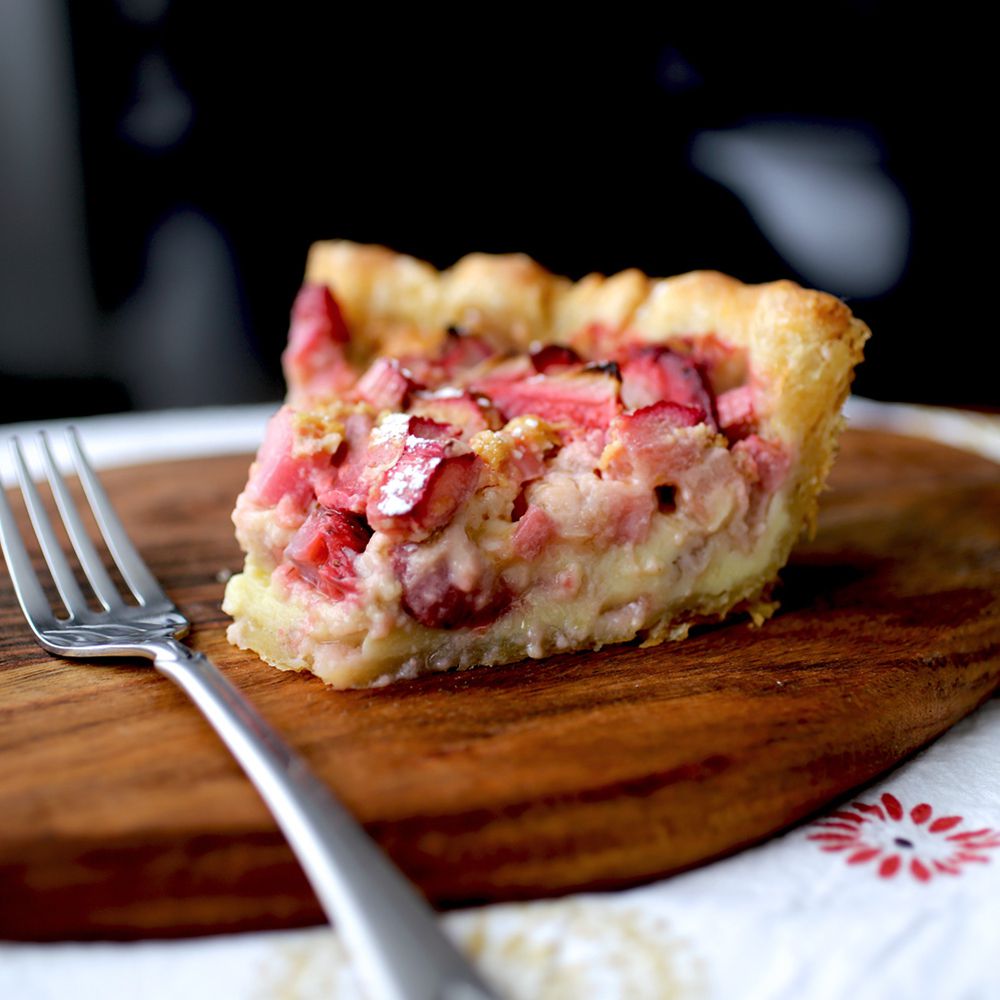

There are pies that are perfectly fine. Predictable, safe, universally accepted. And then there are pies that stop a conversation the moment someone takes the first bite.
This rhubarb custard pie is the second kind.
The tartness of fresh rhubarb suspended in a silky, sweet, vanilla-scented custard filling that sets to a creamy, almost wobbly perfection inside a buttery flaky crust. Every bite is simultaneously tart and sweet, firm and creamy, warm and comforting in the specific way that only old fashioned baked custard can be.
This is a pie that has been on farmhouse tables and church potluck spreads for generations — beloved by people who grew up eating it and completely surprising to people who try it for the first time. It tastes like something your grandmother would have made. It tastes like a specific kind of summer that feels almost nostalgic even if you have never experienced it.
It is also easier to make than most people assume. A simple pie crust, a basic custard filling, a good amount of rhubarb, and an oven. That is genuinely all this takes.
Let’s make it. 🙂
Table of Contents
What Makes Rhubarb Custard Pie Special
The Sweet-Tart Balance Is Genuinely Unlike Anything Else
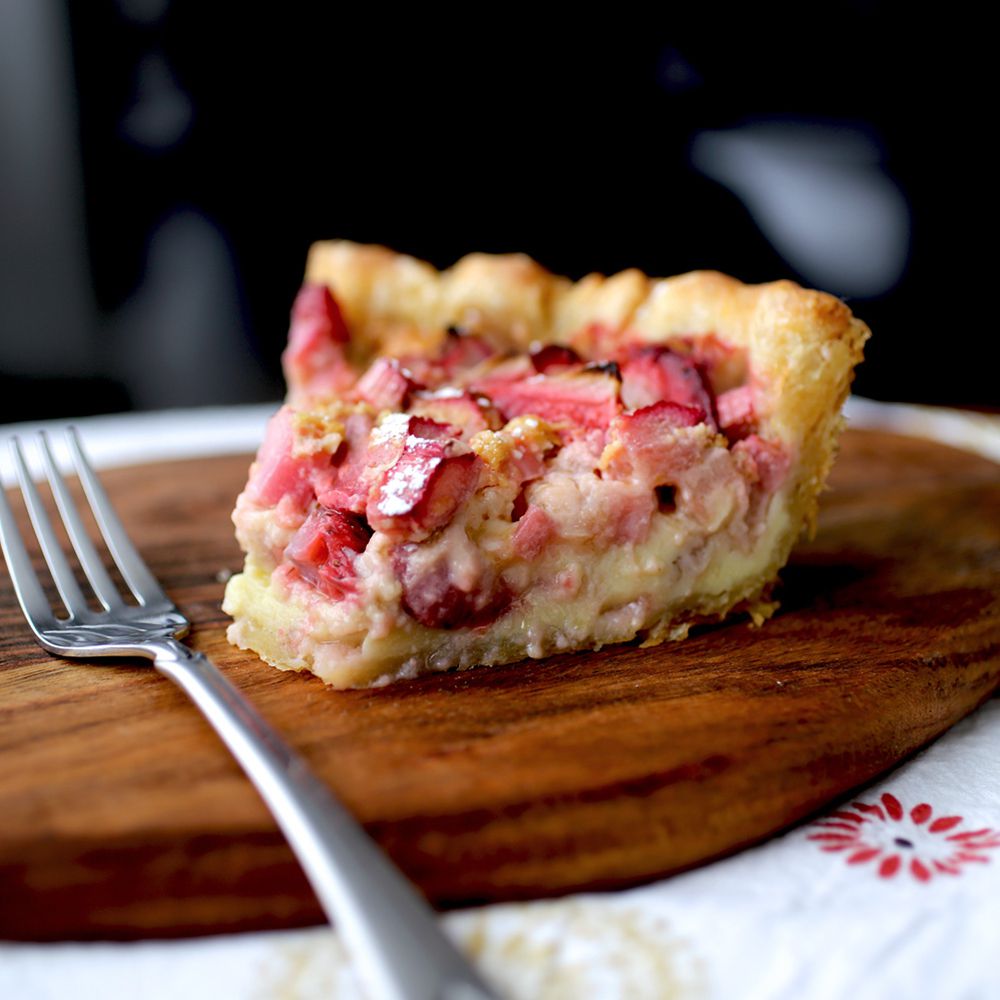
Rhubarb is one of the most intensely tart ingredients used in baking — it makes lemon taste mild by comparison. By itself in a pie it is overwhelming. But suspended in a sweet, rich custard filling the tartness transforms into something extraordinary — it cuts through the richness of the eggs and cream and creates a balance that is simultaneously bright and indulgent. The custard softens the rhubarb’s aggression. The rhubarb prevents the custard from being cloying. Together they create a flavor that is genuinely unique and absolutely impossible to stop eating.
The Custard Filling Is Something Special
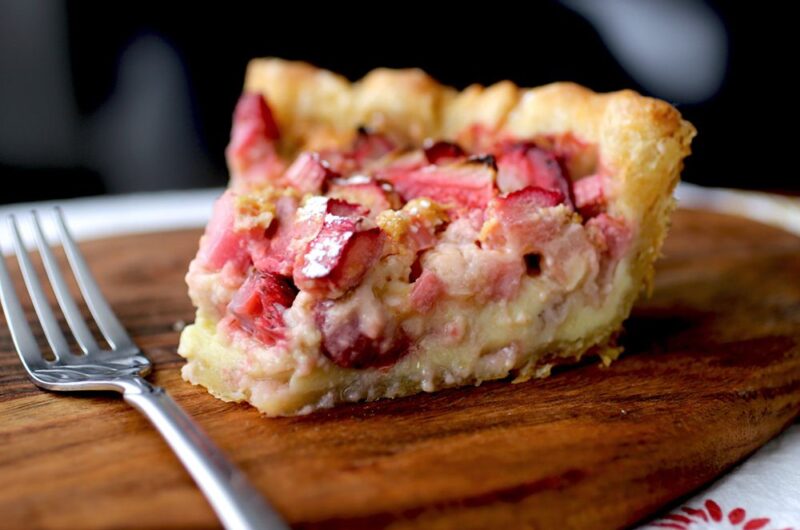
Most fruit pies use a simple filling of fruit, sugar, cornstarch, and sometimes butter. Rhubarb custard pie uses a filling built on eggs, sugar, and cream — a proper custard — with the rhubarb suspended through it. This custard element gives the finished pie a completely different texture from a standard fruit pie. It is silky, slightly wobbly, creamy in a way that sets cleanly when cut. The rhubarb softens during baking and its tartness bleeds into the surrounding custard creating a beautiful marbled effect of pale custard and pink rhubarb that looks stunning when sliced.
It Is a True Old-Fashioned Classic Worth Preserving
Rhubarb custard pie is the kind of recipe that is disappearing from regular baking rotation as newer, trendier desserts take center stage. This is a shame — it is one of the genuinely great American pie traditions. Making and sharing this recipe is a way of keeping something worth keeping. And the reactions from people who try it for the first time — particularly people who have never had rhubarb in any form — make it completely worth the effort every single time.
Understanding Rhubarb
Before the recipe — a brief primer on rhubarb because many people are unfamiliar with it and understanding it makes the recipe make more sense.
Rhubarb is a vegetable — technically — though it is used almost exclusively in sweet applications. It looks like very red, thick celery stalks and has a flavor that is intensely, almost aggressively tart with a faint fruity quality underneath. Raw rhubarb is so sour it is essentially inedible for most people. Cooked with sugar it becomes tender, slightly jammy, and develops a complex flavor that is both fruity and tart simultaneously.
Choosing rhubarb — look for stalks that are firm and crisp with vivid color. Deep red stalks produce a more visually striking pink custard than green stalks — both taste the same but red gives the more beautiful visual result. Avoid stalks that are limp, stringy, or have brown spots.
Preparing rhubarb — trim both ends and remove any leaves completely. Rhubarb leaves are toxic and must never be eaten — only the stalks are used. Cut into approximately 1–2cm pieces for this recipe — small enough to distribute evenly through the custard but large enough to maintain some texture after baking.
Frozen rhubarb — works well in this recipe since the rhubarb bakes fully in the custard. Thaw completely and drain any excess liquid before using — excess moisture from frozen rhubarb can prevent the custard from setting properly.
Rhubarb season — peak season is spring through early summer. If you are making this outside of rhubarb season frozen rhubarb from the grocery store is a reliable alternative.
What Goes Into This Pie
Rhubarb Custard Pie
Course: DessertCuisine: AmericanDifficulty: Medium8
servings20
minutes55
minutes380
kcalIngredients
1¼ cups all-purpose flour
½ tsp salt
1 tsp granulated sugar
½ cup (113g) cold unsalted butter, cut into small cubes
3–4 tbsp ice cold water
- For the rhubarb custard filling:
3½ cups fresh rhubarb, cut into 1–2cm pieces (approximately 400g)
1½ cups granulated sugar
3 large eggs, room temperature
¾ cup heavy cream, room temperature
3 tbsp all-purpose flour
1 tsp pure vanilla extract
¼ tsp freshly grated nutmeg
Pinch of salt
1 tbsp unsalted butter, cut into small pieces
- For serving:
Freshly whipped cream or vanilla ice cream
Powdered sugar for dusting (optional)
Directions
- Make the pie crust — combine flour, salt, and sugar in a bowl. Add cold butter cubes. Using your fingertips or a pastry cutter work the butter into the flour until the mixture resembles coarse crumbs with some pea-sized butter pieces remaining. Add ice water one tablespoon at a time mixing gently until the dough just comes together — do not overwork. Form into a disc, wrap in plastic wrap, and refrigerate for 30 minutes minimum.
- Preheat oven to 220°C. Roll the chilled dough on a lightly floured surface into a circle approximately 30cm in diameter. Transfer to a 9-inch pie dish pressing gently into the bottom and sides. Trim the overhang to approximately 2cm and crimp or fold the edge decoratively. Refrigerate while making the filling.
- Prepare the rhubarb — wash, trim ends, remove any leaves completely. Cut into 1–2cm pieces. Scatter evenly in the chilled pie shell.
- Make the custard filling — whisk eggs in a large bowl until smooth. Add sugar, flour, salt, and nutmeg and whisk until completely combined with no lumps. Add cream gradually while whisking constantly. Add vanilla extract and whisk until smooth and uniform. The filling should be pourable — if lumpy strain through a fine mesh strainer.
- Dot the rhubarb pieces with small pieces of butter scattered evenly across the surface.
- Pour the custard filling slowly over the rhubarb — pouring slowly allows it to fill the gaps between pieces rather than floating rhubarb to the surface. The filling should reach just below the crimped edge of the crust.
- Carefully transfer to the preheated oven. Bake at 220°C for 15 minutes until the crust begins to set and brown slightly.
- Reduce oven temperature to 175°C without opening the door if possible. Continue baking for 35–40 minutes until the edges are fully set and a toothpick inserted one inch from the edge comes out clean. The very center should still have a gentle wobble when nudged — like set jello moving as one piece. If the crust edges are browning too quickly cover with foil strips or a pie shield.
- Remove from oven. Cool on a wire rack at room temperature for at least 2 hours — do not cut during this time. The custard continues to set as it cools.
- Refrigerate for at least 1 hour after room temperature cooling before slicing — overnight is best. Slice with a sharp knife dipped in hot water and wiped dry between cuts.
- Serve at room temperature or slightly chilled with freshly whipped cream or vanilla ice cream.
Rhubarb — the star ingredient. Approximately 3–4 cups of chopped fresh rhubarb for a standard 9-inch pie. The rhubarb should be cut into pieces approximately 1–2cm long — uniform size ensures even distribution through the custard and consistent cooking.
Eggs — three large eggs form the structural foundation of the custard filling. The eggs provide the proteins that coagulate during baking to set the custard from liquid to solid. Room temperature eggs incorporate more evenly than cold eggs — take them out of the fridge thirty minutes before using.
Heavy cream — creates the rich, silky texture that makes this custard so luxurious. Do not substitute with milk or half-and-half — both produce a thinner, less creamy custard that does not set as cleanly. Full fat heavy cream is what gives this pie its characteristic silky, almost wobbly texture.
Granulated sugar — sweetens the filling and balances the tartness of the rhubarb. The amount seems large but is necessary to counterbalance rhubarb’s extreme tartness. Taste the raw filling — if it still seems very tart add another two tablespoons of sugar. The right level of sweetness is one where you can taste both the sweetness and the tartness equally rather than one overwhelming the other.
All-purpose flour — a small amount added to the custard mixture. The flour provides additional starch that stabilizes the custard slightly and prevents it from cracking or weeping during baking. It also creates a slightly thicker set that holds its shape more cleanly when sliced.
Pure vanilla extract — one teaspoon. Vanilla in custard is essential — it adds warmth and depth that makes the creamy filling taste complex and intentional rather than just sweet. Use pure extract not imitation.
Nutmeg — a small pinch of freshly grated nutmeg added to the custard. Nutmeg in custard is a classic pairing that dates back centuries — it adds a subtle warmth and spice that rounds out the flavor in a way that is not identifiable as nutmeg but is very noticeable when absent. Freshly grated is significantly more aromatic than pre-ground.
Salt — a small pinch in the custard filling. Salt in sweet baked goods balances the sweetness and intensifies other flavors. Do not skip it.
Butter — dotted over the rhubarb before the custard is poured. The butter melts into the rhubarb during baking adding richness and helping the rhubarb soften and caramelize slightly at the edges.
Pie crust — a single crust 9-inch pie shell either homemade or store-bought. This is a single-crust pie — no top crust — because the custard filling is the star and covering it would obscure the beautiful appearance of the set custard and rhubarb visible through the top. A properly made homemade pie crust has a flavor and flakiness that store-bought cannot fully replicate but a good quality store-bought crust works perfectly for a weeknight or time-pressed situation.
Making the Perfect Pie Crust
A great pie crust requires cold fat, minimal handling, and confidence. Here is the approach that works every time.
Keep everything cold. Cold butter creates steam pockets during baking that produce flaky layers. Warm butter incorporates into the flour too completely and produces a mealy, dense crust rather than flaky layers. Use cold butter cut into small cubes and keep everything — including the bowl and the water — as cold as possible throughout the process.
Do not overwork the dough. Mix until the dough just comes together — you should still see small pieces of butter visible throughout. These butter pieces are what create the flaky layers. Overworking develops gluten and creates a tough, shrink-prone crust rather than a tender flaky one.
Rest the dough. After forming into a disc wrap in plastic wrap and refrigerate for at least thirty minutes — one hour is better. Resting allows the gluten to relax completely so the dough rolls out smoothly without springing back and does not shrink during baking.
Blind baking — this recipe does not require blind baking. The custard filling is liquid and the crust bakes through the bottom as the custard sets. However if you prefer a crispier bottom crust you can blind bake the empty crust for fifteen minutes at 190°C with pie weights before adding the filling — this creates a slightly crisper base that some people prefer with a custard filling.
The Custard — Getting It Right
The custard filling is the most technically important element of this recipe and understanding how it works makes it much easier to get right.
Do not overbeat the eggs. Whisk the eggs until smooth and uniform — not until light and foamy. Overbeaten eggs incorporate too much air which creates bubbles in the finished custard and can cause it to puff and crack during baking. Gentle whisking is correct.
Add the cream gradually. Pouring hot cream directly onto eggs causes them to scramble — this is called curdling and it ruins the custard completely. Add the cream at room temperature and pour it slowly while whisking constantly. This tempers the eggs and creates a smooth, uniform custard base.
The filling should be pourable. The raw custard mixture should flow easily — it is a liquid that will set during baking. If it seems too thick the flour has clumped — whisk more vigorously or strain through a fine mesh strainer before pouring over the rhubarb.
Fill the pie shell carefully. Pour the custard over the rhubarb slowly so it fills the gaps between the rhubarb pieces rather than floating the rhubarb to the surface. The rhubarb should be distributed through the custard — some pieces will float slightly which is fine and creates the beautiful marbled appearance when the finished pie is sliced.
Baking — Temperature and Timing
Rhubarb custard pie requires two baking temperatures for the best result — a higher initial temperature to set the crust and a lower temperature to cook the custard gently without curdling it.
Start at 220°C for fifteen minutes — this initial high heat sets the bottom crust and creates the beginnings of browning on the pastry edges. It also quickly sets the outer edge of the custard.
Reduce to 175°C for a further 35–40 minutes — the lower temperature allows the custard to cook gently through to the center without the edges overcooking and becoming rubbery. Gentle, even heat is what produces the silky, uniform custard texture.
The wobble test — the most reliable indicator of doneness. Gently nudge the pie — the edges should be completely set and firm while the very center should still have a slight wobble — like a set jello that moves as one piece rather than liquid that ripples. The center will continue to set from residual heat after the oven. A pie pulled when the center is completely firm has been overbaked and will be rubbery rather than silky.
The toothpick test — insert a toothpick one inch from the edge. It should come out clean. The center inch is left to set from residual heat — testing it directly while in the oven often leads to overbaking.
Protect the crust edges — pie crust edges can over-brown before the custard is fully set. Cover the edges loosely with strips of aluminum foil or a pie shield after the first twenty minutes of baking at the lower temperature to prevent burning.
Cooling and Setting — Do Not Rush This
The most common mistake with custard pie is cutting it too soon. A custard pie that comes out of the oven still slightly wobbly in the center needs time to finish setting completely before it can be sliced cleanly.
Let the pie cool on a wire rack at room temperature for at least two hours before slicing. During this time the residual heat continues to set the custard and the internal temperature gradually drops from baking temperature to safe serving temperature.
After two hours at room temperature refrigerate the pie — the cold temperature firms the custard further and makes it significantly easier to slice cleanly. A refrigerated rhubarb custard pie slices beautifully with a sharp knife producing clean, defined slices that hold their shape on the plate.
Ideally make this pie the day before you plan to serve it — an overnight rest in the fridge produces the best possible texture and flavor development. The rhubarb flavor melds into the custard more completely and the overall flavor becomes more harmonious and developed than a same-day pie.
Serving Suggestions
At room temperature — the classic way to serve a custard pie. The custard is firm enough to slice cleanly but soft enough to have the silky, creamy quality that makes it so appealing. Serve within two hours of removing from the fridge for the best balance of firm texture and creamy flavor.
With whipped cream — a generous dollop of freshly whipped cream on each slice adds richness and a visual contrast of white cream against the pale custard and pink rhubarb. The cream also adds a dairy richness that makes the tart rhubarb even more satisfying.
With vanilla ice cream — a scoop of good vanilla ice cream alongside a warm slice of rhubarb custard pie is one of the great dessert combinations. The cold ice cream against the warm pie and the cream against the tart rhubarb creates a contrast of temperature and flavor that is genuinely extraordinary.
With a dusting of powdered sugar — the simplest presentation. A light dusting of powdered sugar over the surface of the cooled pie adds a gentle sweetness and makes the pie look elegant and finished without any additional preparation.
Common Mistakes to Avoid
Not using enough sugar. Rhubarb is extremely tart. A filling that tastes slightly too sweet in the raw state will be balanced and correct after baking. Taste the raw filling before pouring over the rhubarb and adjust sugar before baking — you cannot add more after.
Overbaking. A custard that is fully set with no wobble when it comes out of the oven has been overbaked and will be rubbery and slightly eggy rather than silky and creamy. Pull it when the center still has a gentle wobble.
Cutting before the custard is set. A warm custard pie will not hold its shape when sliced. Always cool for at least two hours at room temperature and then refrigerate before cutting. Overnight is best.
Using the rhubarb leaves. Rhubarb leaves are toxic — always and completely. Only the stalks are used. Cut off and discard the leaves before preparing the rhubarb and never put them in the compost where animals might access them.
Not draining frozen rhubarb. Frozen rhubarb contains significant excess water. Not draining it thoroughly adds liquid to the custard filling that prevents it from setting properly and creates a watery, soft result. Thaw completely and press firmly in a colander to remove as much liquid as possible before using.
Cold eggs directly from fridge. Cold eggs do not incorporate as smoothly into the custard and can cause slight temperature shock when combined with room temperature cream. Take eggs out thirty minutes before making the filling.
Variations to Explore
Strawberry rhubarb custard pie — add one cup of fresh sliced strawberries to the rhubarb. The classic strawberry-rhubarb combination works beautifully in a custard pie — the strawberries add sweetness and a familiar fruitiness that makes the rhubarb more approachable for people trying it for the first time. The color of the finished custard is a gorgeous deep pink.
Rhubarb custard pie with meringue — spread a classic meringue over the set filling and brown under the broiler for two to three minutes. The sweet meringue against the tart custard is an excellent combination and the browned meringue creates a stunning visual.
Brown sugar rhubarb custard pie — replace granulated sugar with light brown sugar. The brown sugar adds a subtle caramel depth that rounds the filling flavor and creates a slightly warmer, more complex sweetness than white sugar alone.
Spiced version — add half a teaspoon of cinnamon and a quarter teaspoon of ginger to the custard along with the nutmeg. The warm spices complement rhubarb’s tartness and give the pie a slightly more complex, autumnal character.
Cream cheese version — beat four ounces of softened cream cheese into the custard mixture before adding the cream. The cream cheese adds richness and a slight tang that makes the custard even creamier and more stable. This version slices particularly cleanly and holds its shape beautifully even at room temperature.
Final Thoughts
Rhubarb custard pie is the kind of recipe that reminds you why classic things became classic in the first place. Not because they are trendy or photographically exciting or built around a viral ingredient. But because they are genuinely, timelessly delicious — the result of generations of bakers discovering that certain combinations of simple ingredients produce something that is more than the sum of its parts.
Tart rhubarb. Sweet silky custard. Buttery flaky crust.
Make it once and you will understand immediately why this pie has survived on family recipe cards for a hundred years.
Make it this weekend. Serve it with a scoop of vanilla ice cream. Watch what happens. 🙂