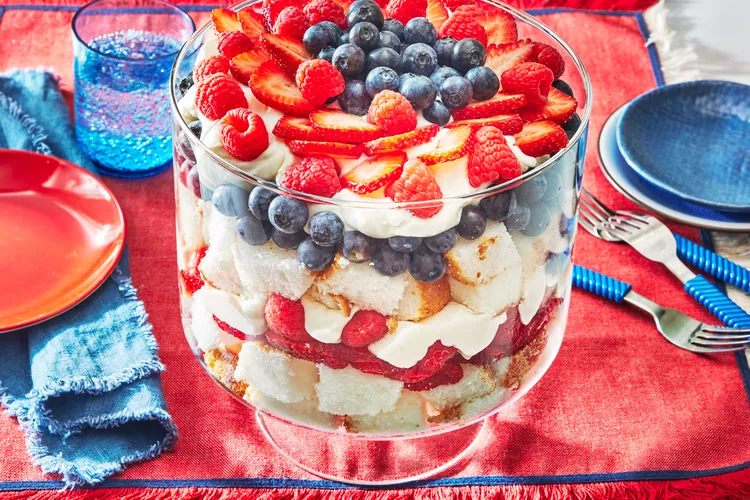
Imagine a sun-drenched backyard in the peak of July. The gentle hum of a lawnmower echoes in the distance, a warm breeze rustles through the oak trees, and the faint, nostalgic scent of charcoal smoke fills the air. Guests are laughing, ice clinks against the sides of lemonade pitchers, and the summer heat is absolute. Suddenly, a heavy, polished glass trifle bowl is lowered onto the center of the picnic table. The ambient chatter drops to a whisper.
The afternoon sun hits the glass, illuminating a stunning, high-definition architectural marvel of vibrant ruby-red strawberries, deep sapphire blueberries, and alternating bands of pristine, snow-white velvet cream. Nestled between these layers are golden cubes of delicate sponge cake, glistening subtly with a bright hint of citrus syrup.
The beauty of a world-class trifle is its structural illusion. It looks like it required hours of meticulous, high-stress pastry work and the hands of a professional Michelin-starred chef. But here is the magnificent truth: a trifle is completely stress-free. There is no baking anxiety, no precision cake decorating, and absolutely no risk of a collapsing layer cake. It is a completely forgiving, assembly-based showstopper that transforms humble, fresh summer fruits and simple cream into a luxurious, texturally complex dessert triumph in just under twenty minutes.
3. Introduction: What is a Red, White, and Blue Trifle?
Historically descending from the classic British trifle of the 16th century, a modern trifle is an elegant dessert constructed by layering alcohol-soaked or syrup-brushed cake, thick custard or cream, and fresh fruit inside a deep, straight-sided glass vessel. This specific Red, White, and Blue variation is a celebrated culinary icon of summer, engineered to highlight the absolute zenith of seasonal berry production while offering a visually striking theme perfect for patriotic gatherings, summer solstices, or high-end backyard brunches.
The true magic of a brilliant trifle relies on a phenomenon called flavor migration. As the assembled dish rests in the refrigerator, the juices from the macerated berries gently seep downwards, perfuming and softening the structural cake cubes without breaking down their integrity. At the same time, the surrounding velvet cream locks in the moisture, ensuring that every single spoonful yields an incredible contrast of textures: the clean, juicy pop of fresh whole berries, the soft, rich chew of the sponge, and the airy, silky luxury of the cream.
Beyond the undeniable visual euphoria it provides, this recipe is a masterstroke of functional entertaining. It is naturally high in antioxidants from the heavy use of raw, fresh berries, entirely customizable to low-sugar profiles, and completely devoid of heavy, cloying artificial food dyes. The brilliant colors come strictly from nature’s own palette. It is a self-contained, large-format dessert that allows hosts to completely step away from the kitchen, knowing their centerpiece is resting safely in the fridge, developing deeper flavors by the minute.
4. “Why This Recipe Is Better” Section
Red White and Blue Trifle Recipe (Anti-Soggy Guide)
Ingredients
For the Cake Structure:
- 1 large loaf approx. 16 oz All-Butter Pound Cake, cut into uniform 1-inch cubes
- 1 tbsp Fresh Lemon Juice
- 2 tbsp Simple Sugar Syrup For light brushing
For the Vibrant Fruit Layers:
- 4 cups Fresh Strawberries hulled and sliced into even ¼-inch discs
- 3 cups Fresh Whole Blueberries washed and dried meticulously
- 1 tbsp Granulated Sugar For strawberry maceration
- 1 tsp Fresh Lemon Zest
For the Stabilized White Velvet Cream:
- 8 oz 1 brick Full-Fat Cream Cheese, completely softened to room temperature
- ¾ cup Powdered Sugar
- 1 tsp Pure Vanilla Bean Paste or Vanilla Extract
- 2 cups Heavy Whipping Cream Must be ice-cold, minimum 36% milk fat
Instructions
- `
- Step 1: The Berry Architecture
- In a glass mixing bowl, combine your sliced strawberries, 1 tablespoon of granulated sugar, and 1 teaspoon of fresh lemon juice. Toss gently using a silicone spatula to coat the berries evenly. Let them rest on the counter for 15 minutes; they will begin to gloss over and release a beautiful, clear ruby syrup. In a separate bowl, ensure your whole blueberries are completely dry and tossed with the fresh lemon zest.
- Step 2: Crafting the Stabilized White Velvet Cream
- In your stand mixer bowl fitted with the paddle attachment, place the softened cream cheese, powdered sugar, and vanilla bean paste. Beat on medium-high speed for 2-3 minutes until the mixture is completely smooth, creamy, and free of any tiny structural lumps. Scrap down the sides of the bowl. Swap out the paddle for the whisk attachment. With the mixer running on low, slowly pour in the ice-cold heavy whipping cream down the side of the bowl. Once integrated, crank the speed to high and whip for 2 full minutes until the mixture expands into a thick, billowy, and completely stable cream that holds stiff structural peaks.
- Step 3: Calibrating the Base Layer
- Take your clean glass trifle bowl. Arrange a single, tightly packed layer of your day-old pound cake cubes directly at the absolute bottom of the vessel. Use a pastry brush to lightly dab the cake cubes with your simple syrup and lemon juice mixture. Ensure the cake completely covers the glass base.
- Step 4: Engineering the Glass Perimeter Lines
- Using your offset spatula, take roughly one-third of your stabilized white velvet cream and spread it directly over the cake layer, smoothing it flush against the glass walls. Now, pick up your macerated strawberry slices. Carefully place them flat, cut-side facing outwards, along the entire perimeter wall of the glass, pressing them gently into the cream to lock them in place. Once the outer circle is perfect, fill the interior space behind the strawberries with more strawberry pieces.
- Step 5: Building the Deep Sapphire Layer
- Add your second layer of pound cake cubes directly over the strawberry layer, pressing down very gently to stabilize the build. Spread another third of the white velvet cream completely flat over the cake. Take your whole blueberries and build a thick, solid sapphire band along the perimeter of the glass, then fill the entire interior core with the remaining blueberries.
- Step 6: The Summit Seal
- Drop your final remaining pound cake cubes over the blueberry layer. Smooth the remaining white velvet cream completely over the top, creating a pristine, snow-white canvas that completely seals the trifle from edge to edge.
- Step 7: The Cold Maturation
- Execute your chosen decorative geometric pattern or American flag mosaic using your leftover strawberries and blueberries on the top cream layer. Cover the top of the trifle bowl tightly with plastic cling wrap and transfer it directly into the coldest section of your refrigerator. Let it chill completely undisturbed for a minimum of 4 hours (ideally 8 to 12 hours) before serving to allow the ultimate structural and flavor synthesis to occur. Serve cold using a long-handled spoon.
Image Credit: southernliving.com
The Annihilation of the “Soggy Cake” Syndrome
The absolute greatest flaw in standard internet trifle recipes is that they turn into an unappetizing, watery, mushy soup within two hours of assembly. This occurs because lazy recipes use high-moisture store-bought angel food cake or overly wet pudding mixes. This recipe fundamentally solves that structural flaw. By utilizing a dense, tight-crumbed Pound Cake or traditional Sponge Cake, and introducing a precisely stabilized white chocolate cream cheese velvet layer, we create a moisture-resistant barrier that preserves the structural integrity of the cake for days.
Real Sugar Engineering and Acidity Balance
Most generic versions rely heavily on chemical-tasting, ultra-sweet pre-packaged whipped toppings and instant pudding mixes laden with sodium and synthetic stabilizers. This results in a heavy, one-dimensional, saccharine dessert that leaves a greasy coating on the roof of your mouth. Our recipe uses real heavy whipping cream emulsified with a touch of cream cheese for natural structure, balanced with the bright, sharp acidity of real lemon zest and fresh macerated berries. The sugar profile is calculated to highlight the natural sweetness of the fruit, not mask it.
Maximum Structural Resilience for Travel
A summer dessert must be capable of surviving real-world elements: a car ride to a neighborhood potluck, an hour sitting on an outdoor buffet table, or a busy family style serving line. Because our white velvet cream layer is physically stabilized by natural dairy fats and proteins, this trifle does not lose its structural loft or separate into a watery mess under ambient room temperatures, unlike unstable, artificial aerosol creams.
5. Ingredients Deep Dive
The Structural Anchor: All-Butter Pound Cake
- Why it’s used: Pound cake possesses a dense, sturdy, and close-grained crumb structure that functions like a culinary sponge.
- Flavor & Texture Impact: It is capable of absorbing the beautiful fruit juices and citrus syrups without collapsing into a mushy paste. Its rich, buttery flavor notes provide a luxurious base that grounds the light, airy elements of the dessert.
- Pro-Tip: For the ultimate texture, use a day-old pound cake. Lightly toasting the cake cubes under a broiler for 60 seconds before assembly creates a micro-crust that acts as an extra defense against sogginess.
The Red Element: Fresh Macerated Strawberries
- Why it’s used: Fresh, ripe strawberries provide the brilliant ruby-red bands of the trifle. We slice them evenly to ensure uniform layers against the glass.
- Flavor & Texture Impact: By tossing the sliced strawberries with a tiny sprinkle of sugar and lemon juice (maceration), we draw out their internal juices, creating a natural, glossy syrup that tastes intensely vibrant and alive.
- Pro-Tip: Never use frozen, thawed strawberries for the exterior viewing layers. They lack cellular structure, look dark and bruised, and will bleed excess water rapidly into your white cream.
The Blue Element: Whole Sapphire Blueberries
- Why it’s used: Blueberries provide the deep blue aesthetic and structural stability to the trifle layers.
- Flavor & Texture Impact: Because they are kept whole, they offer a magnificent, clean, textural “pop” when bitten into, breaking up the creamy smoothness of the surrounding elements with an earthy, sweet-tart explosion.
- Pro-Tip: Gently pat your washed blueberries completely dry with a lint-free towel before adding them to the bowl. Any residual washing water will create unsightly streaks in the white cream layer.
The White Velvet: Cream Cheese & Whipped Cream Emulsion
- Why it’s used: Instead of weak, unstable plain whipped cream, we use a blend of heavy cream and softened brick cream cheese.
- Flavor & Texture Impact: The cream cheese introduces a subtle, sophisticated cheesecake-like tang that prevents the dessert from tasting overly sweet, while providing the structural density needed to support the physical weight of the heavy berry layers above it.
6. Equipment + Pro Tips
The Essential Tools
To create a visual masterpiece, a clear, straight-sided glass trifle bowl (ideally 3 to 4-quart capacity) is absolutely non-negotiable. Avoid bowls with sloped, conical sides, as they distort the thickness of your layers as you build upwards. You also need a long, offset metal spatula for smoothing the cream flush against the glass walls, a microplane grater for capturing fresh lemon zest without the bitter white pith, and an electric stand mixer or hand mixer with a chilled metal bowl and whisk attachment to achieve maximum volume and stability in your dairy cream.
Insider Culinary Secrets
- The Perimeter First Law: When assembling a trifle, always arrange your fruit and cake slices tightly against the glass exterior wall first, creating a perfect, unbroken circle. Once the perimeter barrier is locked in, dump your remaining cake and fruit fill into the dead center of the bowl. This guarantees flawless, crisp geometric lines when viewed from the outside.
- The Secret Acid Splash: Before layering your cake cubes, lightly mist them with a pastry brush dipped in a simple mixture of fresh lemon juice and sugar syrup. This cuts through the heavy fat of the butter and cream, waking up the entire flavor profile of the dessert.
Mistake Prevention Guide
The single biggest disaster when making a trifle is “color bleeding.” If you add wet, freshly sliced berries directly against the white cream and then stir or press aggressively, the red anthocyanin pigments will immediately bleed, turning your beautiful white layers into a messy, streaky pink smudge. To prevent this, always ensure your cream layer is smoothed down completely flat first, and gently drop the berries vertically onto the cream rather than sliding or wiping them against the glass sides.
7. Texture & Perfection Guide
What Perfection Looks Like
A perfectly constructed Red, White, and Blue Trifle should look like a flawless geological cross-section of summer luxury. When looking through the glass, you should see distinct, sharp, unblended bands of color. The cream should look thick, smooth, and billowy, holding its shape completely without sagging. When a long serving spoon is driven deep into the bowl, it should cut through the layers cleanly, emerging with a structural sample of cake that is beautifully moist but holds its square shape, surrounded by intact fruit and velvety cream.
Troubleshooting Matrix
| Issue | Root Cause | Exact Fix |
| The white cream is runny/slumping | The heavy cream was under-whipped, or the cream cheese was too warm when integrated. | Place the entire bowl of cream into the freezer for 10 minutes, then whip it aggressively on high speed until it forms stiff, structural peaks before resuming assembly. |
| The cake layers are completely dry | The cake was cut into overly large chunks, or the trifle wasn’t allowed to rest long enough. | Cube your cake strictly into small 1-inch pieces to maximize surface area absorption, and ensure the completed trifle rests in the fridge for a minimum of 4 hours before serving. |
| Juice is pooling at the bottom | The berries were over-macerated with too much sugar, creating a watery flood. | Before layering heavily macerated fruit, pour them into a fine-mesh strainer briefly to drain off excess running liquid, saving that intensely flavored syrup to brush directly onto the dry cake layers. |
8. Garnish & Presentation (Pinterest-Focused)
To transform your trifle into a viral, save-worthy pin on Pinterest, the top surface layer must be an absolute showstopper. Do not simply throw a chaotic handful of leftover fruit onto the top cream layer.
- The Concentric Geometric Mandala: Use your whole blueberries to form a perfect, tight dark outer ring around the top perimeter of the white cream. Move inward with a ring of overlapping, beautifully shingled strawberry slices. Alternate this pattern until you reach the center, completing it with a single, pristine fresh mint leaf sprig. The geometric perfection looks incredibly premium and artisanal.
- The American Flag Mosaic: Lay down a clean field of whole blueberries in the upper left quadrant of the top cream layer to represent the stars. Use long, parallel rows of sliced red strawberries across the remaining surface to mimic the historic stripes. This clear, patriotic storytelling instantly drives massive engagement during holiday search trends.
9. Variations Section
- The High-Protein/Fitness-Friendly Version: Replace the butter pound cake with a homemade low-carb almond flour sponge cake. Swap the heavy cream and cream cheese for a blend of thick fat-free Greek yogurt and vanilla micellar casein protein powder sweetened with stevia. This cuts the carbohydrates and fat profiles by 70% while maximizing protein retention.
- The No-Bake Ultimate Fast Track: If you are completely short on time, utilize premium store-bought vanilla glazed donuts or soft bakery sugar cookies broken into chunks as your cake layer. The structural glaze on the donuts adds an incredible texture and a fun, modern twist to the classic format.
- The White Chocolate Mascarpone Indulgence: Melt ½ cup of premium white chocolate couverture chips and fold it into the cream layer along with Italian Mascarpone cheese instead of traditional American cream cheese. This creates an incredibly luxurious, velvety, and sophisticated flavor profile suited for high-end evening galas.
- The Firework Angel Food Adaptation: If you prefer a lighter, melt-in-your-mouth airy feel, use a high-quality angel food cake cubed tightly. To prevent it from going soggy, toss the cake cubes lightly with toasted, shredded coconut flakes to create a moisture-blocking barrier before applying the berry layers.
10. Batch, Meal Prep, & Party Scaling
- How to Scale for Mega Gatherings: If you are hosting a massive neighborhood cookout, do not build a single, gargantuan 10-quart trifle bowl, as the weight of the upper layers will inevitably crush the bottom layers into mush. Instead, build two identical 3-quart bowls, keeping one pristine and refrigerated while the first one is actively being enjoyed by guests.
- Individual Mason Jar Meal Prep: For a highly aesthetic, portable party option, assemble the trifle directly inside individual 8-ounce wide-mouth glass Mason jars. Screw the lids on tightly. These can be packed directly into a cooler filled with ice for seamless transportation to beaches, parks, or tailgates without any risk of spilling or losing presentation quality.
11. Common Mistakes to Avoid
- Using Warm Cake: Layering pound cake that has been freshly baked and is still holding heat will instantly liquefy the fats in the whipped cream layer, turning your beautiful white bands into a watery dairy pool.
- Skipping the Rest Period: Serving a trifle immediately after assembly is a major mistake. It takes a minimum of 4 hours in the cold refrigerator for the flavors to migrate, the syrup to soften the cake crumb, and the layers to lock together structurally.
- Using Artificial Whipped Topping: Pre-packaged frozen whipped toppings melt rapidly into a synthetic, greasy fluid when exposed to summer heat. Always rely on real, structurally stabilized dairy fats.
- Over-Slicing the Blueberries: Keep your blueberries completely whole. Slicing them opens up their internal moisture channels, causing their dark purple juices to completely dye your pristine white cream layer an unappealing gray-muddy color.
- Dumping Fruit Juices Carelessly: While the syrup from macerated berries is pure gold, dumping a massive cup of loose juice directly into the center of the bowl will overwhelm the cake’s absorption limits, causing immediate structural collapse.
12. Serving Suggestions
- The 4th of July Backyard Feast: Pair this magnificent trifle with classic summer savory standouts: smoked beef brisket, charred corn on the cob brushed with lime butter, and ice-cold craft beers. The cool, bright fruitiness of the trifle acts as the ultimate palate cleanser after rich, heavy savory foods.
- The Elegant Holiday Brunch: Serve individual portions of the trifle in delicate crystal coupe glasses alongside a bottle of chilled Prosecco or Champagne. Pouring a splash of sparkling wine directly over the top of the individual serving creates an incredibly sophisticated, effervescent dessert experience.
- The Late-Night Firework Snack: Keep the trifle chilling deep in your cooler until the very final firework show begins. Hand out sturdy eco-friendly bowls and long spoons, allowing guests to eat this refreshing, cold treat directly out of their hands while looking up at the sky.
13. Pinterest & Trend Insights
This specific dessert recipe dominates social and search ecosystems due to key behavioral trends:
- Zero-Bake Summer Preference: When outdoor temperatures soar, home cooks actively refuse to turn on their large ovens. High-end, zero-bake assembly desserts experience an astronomical spike in search volume during June and July.
- High Contrast Graphic Appeal: The bold, patriotic primary colors of red, white, and blue arranged in crisp, clean layers create an instantly thumb-stopping graphic pattern that naturally boosts click-through rates on visual pin feeds.
- Mass Entertaining Versatility: Modern party hosts seek large-format, make-ahead desserts that eliminate the stress of individual plating or last-minute kitchen work, making the classic trifle bowl the ultimate functional choice.
14. Final Thoughts
There is a profound joy in creating a dish that balances absolute visual drama with effortless execution. The classic Red, White, and Blue Trifle reminds us that spectacular food doesn’t have to be a high-stress test of pastry technicality. By simply selecting pristine seasonal ingredients, understanding how to control moisture and fat stability, and paying careful attention to your layering lines, you can create a towering monument of summer joy that your guests will talk about long after the last firework has faded. Find your finest glass bowl, source the freshest berries you can lay your hands on, and let the summer celebration begin.