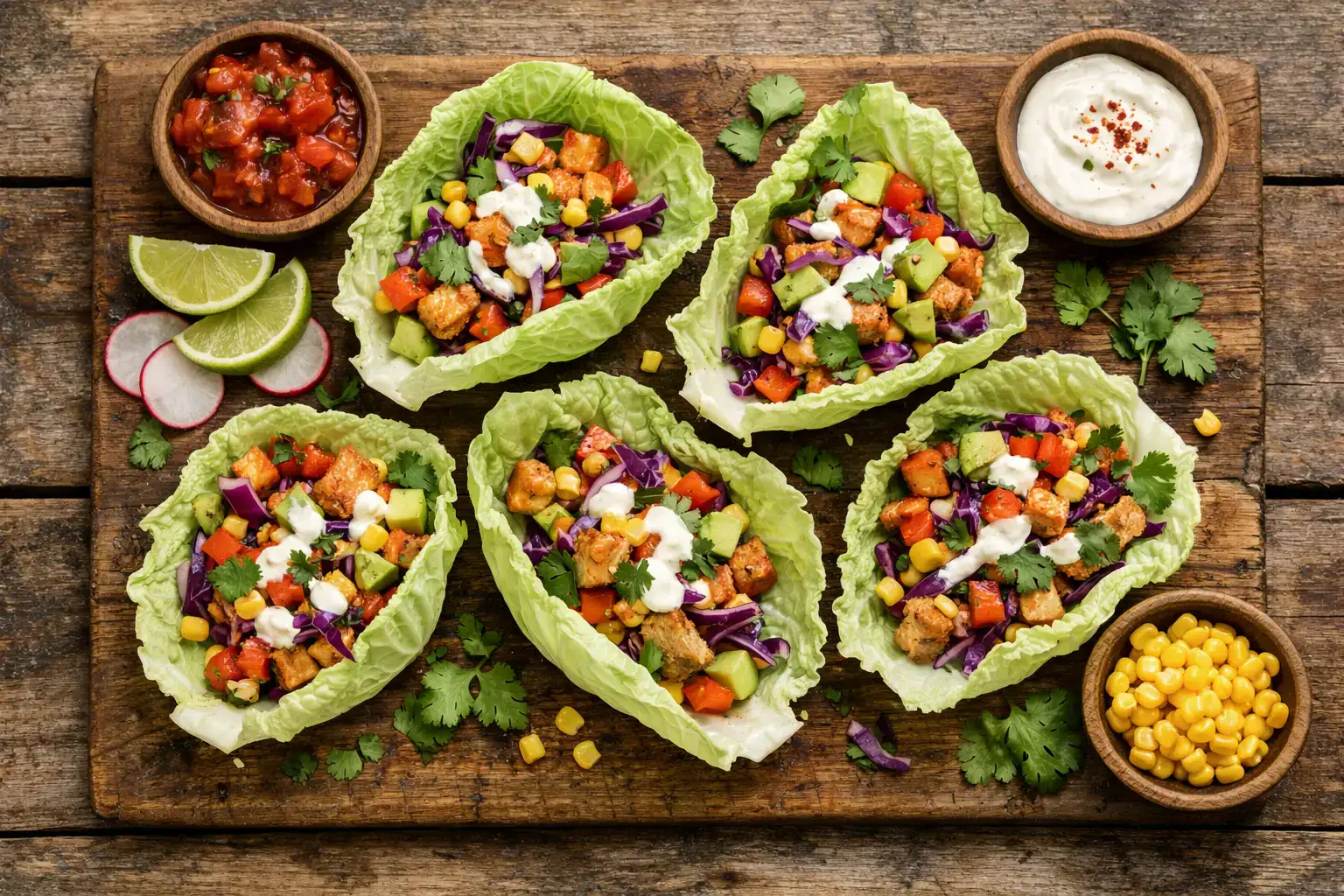
There is a moment in everyone’s healthy eating journey where you realize that the tortilla is not actually the point.
The point is everything inside it — the seasoned meat, the fresh toppings, the creamy sauce, the burst of lime. The tortilla is just the vehicle. And when you swap it for a crisp, fresh cabbage leaf that adds its own crunch and a subtle sweetness that actually complements every filling beautifully — you realize you have not compromised at all.
You have upgraded.
Cabbage taco wraps are the low carb dinner that does not feel like a low carb dinner. Crunchy cabbage leaves filled with perfectly seasoned ground beef or chicken, fresh pico de gallo, creamy avocado, and a drizzle of chipotle crema. Ready in twenty minutes. Under 300 calories per serving. More protein than a standard taco. And genuinely — not just technically, not just for people trying to eat healthily — delicious.
This is the recipe that converts skeptics. Every single time. 🙂
Why Cabbage Works Better Than You Think as a Taco Shell
Cabbage Taco Wraps
Ingredients
- 1 large head green, napa, or red cabbage
- 12 large outer leaves carefully separated and dried
For the taco filling:
- 500g ground beef (80/20) or ground chicken
- 1 tbsp olive oil
- 2 tsp cumin
- 1 tsp chili powder
- 1 tsp garlic powder
- ½ tsp onion powder
- ½ tsp smoked paprika
- ½ tsp dried oregano
- ¼ tsp cayenne pepper (adjust to taste)
- 1 tsp salt
- ¼ cup water or beef stock
For the chipotle crema:
- ½ cup sour cream or full fat Greek yogurt
- 1–2 chipotle peppers in adobo sauce finely minced
- 1 tsp fresh lime juice
- ¼ tsp garlic powder
- Pinch of salt
For the toppings:
- 1 cup fresh pico de gallo (2 tomatoes, ¼ white onion, 1 jalapeño, cilantro, lime juice, salt)
- 2 ripe avocados sliced or mashed
- ½ cup shredded sharp cheddar or Monterey Jack
- Fresh cilantro
- Lime wedges
- Hot sauce of choice
Instructions
- Prepare cabbage leaves — carefully separate the outermost large leaves from the head of cabbage. Wash thoroughly under cold water. Pat completely dry with paper towel. Trim the thick central rib from each leaf if needed for easier folding. Refrigerate until ready to assemble — cold crisp leaves are essential.
- Make the chipotle crema — combine sour cream or Greek yogurt, minced chipotle peppers, lime juice, garlic powder, and salt in a small bowl. Stir until completely smooth. Taste and adjust heat and lime. Refrigerate until serving.
- Make pico de gallo — finely dice tomatoes, white onion, and jalapeño. Combine with roughly chopped cilantro, fresh lime juice, and salt. Stir together and set aside. Taste and adjust salt and lime.
- Cook the filling — heat olive oil in a large skillet over medium-high heat. Add ground meat. Let it sit undisturbed for 60–90 seconds to develop browning on the bottom. Break apart into small even pieces using a wooden spoon or meat chopper. Cook for 6–8 minutes until fully cooked through with no pink remaining.
- Drain excess fat if needed leaving a small amount for flavor.
- add taco seasoning blend over the cooked meat. Add water or stock. Stir thoroughly to coat every piece of meat in the spices. Cook for 2–3 minutes until liquid reduces and the spices create a deep flavorful glaze coating the meat. Taste and adjust seasoning.
- Assemble wraps immediately before serving — lay two cabbage leaves nested together on a flat surface. Add 2–3 tablespoons of hot taco filling. Scatter shredded cheese directly on the hot meat so it melts slightly. Add avocado slices. Spoon pico de gallo over the top. Drizzle chipotle crema generously. Scatter fresh cilantro.
- Squeeze a fresh lime wedge over each assembled wrap. Add hot sauce if desired.
- Serve immediately — eat within 5 minutes of assembly for the best crunch and texture.
Image Credit: @nutriscan.app
The Crunch Is Actually Better Than a Hard Shell
A hard corn taco shell shatters the moment you bite into it sending filling everywhere. A soft flour tortilla goes limp almost immediately. A cabbage leaf has a satisfying, firm crunch that holds up through the entire eating experience — it does not shatter, it does not go limp, and it does not tear. The structural integrity of a well-chosen cabbage leaf is genuinely superior to most taco shells for the practical business of holding fillings and eating without disaster.
The Flavor Complements Rather Than Competes
Raw cabbage has a mild, slightly sweet, faintly peppery flavor that is present but subtle. It does not compete with the bold seasoning of the taco filling — it complements it. The slight sweetness of the cabbage against the spiced, savory meat is genuinely pleasant in the same way that coleslaw alongside pulled pork works so well. The cabbage is not neutral filler — it is a flavor contributor that makes the whole wrap taste more interesting and fresh.
The Nutritional Upgrade Is Significant
A standard flour tortilla contains approximately 150 calories and 28g of carbohydrates with minimal nutritional value beyond the carbs. A large cabbage leaf contains approximately 5 calories and 1g of carbohydrate with meaningful amounts of vitamin K, vitamin C, and fiber. Swapping two tortillas for two cabbage leaves saves approximately 300 calories and 54g of carbohydrates per meal — numbers that make a real difference for anyone managing their carb intake or calorie consumption. The filling stays identical. The nutritional profile changes dramatically.
Choosing the Right Cabbage
Not all cabbage works equally well for taco wraps and choosing the right variety makes a significant difference to the eating experience.
Green cabbage — the most widely available and the most practical choice. The outer leaves are large, sturdy, and slightly curved — naturally cup-shaped in a way that is ideal for holding fillings. The flavor is mild and slightly sweet. Remove the outer leaves carefully — they should be intact with no tears. The larger the cabbage the larger the individual leaves and the more filling each wrap can hold.
Napa cabbage — the best choice for taco wraps if available. Napa cabbage leaves are more elongated and have a more delicate texture than green cabbage — they flex without cracking when you fold them around fillings. The flavor is milder and sweeter than green cabbage. The texture is slightly less crunchy but more pliable — easier to wrap without splitting.
Red cabbage — works well and adds a striking purple color that makes the wraps look visually stunning. The flavor is slightly more peppery than green cabbage. The leaves are slightly less pliable than napa but still work well. The color contrast of purple cabbage against orange-seasoned meat, red tomatoes, and green avocado is genuinely beautiful.
Savoy cabbage — crinkled, dark green leaves with a more tender texture than regular green cabbage. Works beautifully as a wrap and has a slightly more complex, earthy flavor that suits heartier fillings like braised beef or pulled pork.
Choosing leaves — select the outermost large leaves from a fresh head of cabbage. These are the largest and most cup-shaped. Wash thoroughly and pat completely dry — wet cabbage makes wraps slippery and difficult to hold. If the leaves are very large trim them to a manageable size by cutting away the thick central rib which makes them easier to fold.
What Goes Into These Wraps
Cabbage leaves — 2 to 3 large leaves per person depending on leaf size and appetite. The leaves should be washed, dried, and kept cold in the fridge until serving — cold, crisp cabbage holds its shape better and tastes more refreshing than room temperature cabbage.
Ground beef or chicken — the protein base of the filling. Ground beef with 15–20% fat content produces the most flavorful, juicy filling. Ground chicken is leaner and lighter — excellent for a lower calorie version. Ground turkey works equally well as a middle ground between the two. The protein should be seasoned boldly — the cabbage leaf has no seasoning of its own and the filling needs to carry all the flavor.
Taco seasoning — either store-bought or homemade from pantry spices. Homemade taco seasoning is significantly better than most store-bought versions and takes thirty seconds to mix. Cumin, chili powder, garlic powder, onion powder, smoked paprika, oregano, salt, and a pinch of cayenne. The spice blend should be fragrant, bold, and slightly smoky.
Fresh pico de gallo — diced tomatoes, white onion, jalapeño, cilantro, lime juice, and salt. The fresh acidity of pico de gallo is what makes these wraps taste bright and alive rather than just seasoned meat in a leaf. Make it fresh — store-bought pico de gallo is acceptable but fresh is significantly better and takes five minutes.
Avocado — sliced or mashed into a quick guacamole. The creaminess of avocado against the crunchy cabbage and spiced meat is one of the best textural combinations in this wrap. Add lime juice to the avocado immediately after cutting to prevent oxidation.
Chipotle crema — sour cream or Greek yogurt mixed with chipotle peppers in adobo sauce, lime juice, and a pinch of salt. This sauce is the element that elevates these wraps from good to genuinely excellent. The smoky, slightly spicy, creamy quality of chipotle crema drizzled over the filling ties every component together. It takes two minutes to make and makes an enormous difference.
Shredded cheese — a small amount of sharp cheddar or Monterey Jack scattered over the hot filling melts slightly and adds richness. Use real block cheese grated fresh — pre-shredded cheese has anti-caking powder coating that prevents it from melting properly.
Fresh lime — squeezed over the assembled wrap immediately before eating. Fresh lime is not optional. The acidity brightens every flavor in the wrap and adds the characteristic citrus note that makes Mexican-inspired food taste complete. Always have lime wedges at the table.
Fresh cilantro — scattered over the top. Cilantro is divisive — people either love it or find it tastes like soap due to a genetic variation. For those who love it — use it generously. For those who do not — fresh flat leaf parsley is a reasonable substitute that provides the fresh herb quality without the polarizing flavor.
Hot sauce — a few drops of your preferred hot sauce added after assembly. Cholula, Valentina, or Tapatio are all excellent choices that complement Mexican-inspired flavors without overwhelming them.
The Seasoning Blend — Making the Filling Taste Exceptional
The filling seasoning is where all the flavor lives and it deserves proper attention. Here is the homemade taco seasoning blend that makes this filling genuinely outstanding.
Two teaspoons cumin — the earthy, warm backbone of every Mexican-inspired dish. Non-negotiable and used generously.
One teaspoon chili powder — adds depth, color, and a mild background heat. Not the same as cayenne — chili powder is a blend of spices that adds complexity rather than just heat.
One teaspoon garlic powder — savory depth that permeates the entire filling.
Half teaspoon onion powder — rounds out the garlic and adds sweetness.
Half teaspoon smoked paprika — subtle smokiness that makes the filling taste like it spent time over a grill even though it was cooked in a pan.
Half teaspoon dried oregano — adds a slight herby complexity that is specifically characteristic of Mexican-style seasoning.
Quarter teaspoon cayenne — adjustable heat. Start small and add more to your preference.
One teaspoon salt — seasons the whole blend and makes every other spice more vivid.
Mix all together before cooking. Add to the meat after browning — not before — so the spices bloom in the fat from the meat rather than burning against a dry pan.
How to Cook the Perfect Filling
Step one — heat matters. Use medium-high heat. A properly hot pan browns the meat rather than steaming it. Brown meat equals caramelized flavor. Grey steamed meat equals flat flavor. Do not add the meat to a cold pan.
Step two — do not stir immediately. Add the ground meat and let it sit undisturbed for sixty to ninety seconds before breaking it up. This initial undisturbed contact with the hot pan creates browning on the bottom surface — flavor that you lose if you start breaking it up immediately.
Step three — break it up properly. Use a wooden spoon or a meat chopper to break the meat into very small, even pieces as it cooks. Taco filling with large uneven chunks does not distribute evenly in the wraps — fine, uniform pieces coat every bite with seasoned meat rather than alternating between large chunks and gaps.
Step four — drain excess fat if needed. If using higher fat ground beef drain most of the rendered fat before adding seasoning — leaving a small amount for flavor but removing excess that would make the filling greasy.
Step five — add seasoning and a small amount of liquid. After draining add the spice blend and approximately a quarter cup of water or beef stock. Stir thoroughly and cook for two to three minutes until the liquid reduces and the spices coat every piece of meat in a deep, flavorful glaze. The liquid helps the spices distribute evenly and creates the slightly saucy consistency that makes taco filling so satisfying.
Step six — taste and adjust. Taste the filling before assembling and adjust salt, lime, and spice level. The filling should taste bold and well-seasoned — it carries all the flavor in the wrap.
Making the Chipotle Crema
This two-minute sauce is the element that makes these wraps taste restaurant-quality rather than home-cooked.
Combine half a cup of sour cream or full fat Greek yogurt with one to two chipotle peppers in adobo sauce finely minced — start with one and taste, adding more for more heat and smokiness. Add a teaspoon of fresh lime juice, a small pinch of salt, and a quarter teaspoon of garlic powder. Stir until completely smooth and uniform.
The crema should taste smoky, slightly spicy, creamy, and bright from the lime. Taste and adjust — more chipotle for more heat and smokiness, more lime for brightness, more salt if it tastes flat.
Store in a squeeze bottle or small jar for easy drizzling over the assembled wraps. The crema keeps in the fridge for up to five days and works as a sauce for essentially any Mexican-inspired dish — grilled chicken, fish tacos, burrito bowls, or as a dipping sauce for roasted vegetables.
Greek yogurt vs sour cream — Greek yogurt produces a slightly tangier, higher protein crema with less fat. Sour cream produces a richer, creamier result. Both are excellent. Use full fat versions of whichever you choose for the best texture and flavor.
Assembly — Building the Perfect Wrap
The assembly technique determines how well the wrap holds together and how good it looks in photos.
Keep the cabbage leaves cold until assembly — cold, crisp leaves hold their shape significantly better than room temperature leaves that have gone slightly limp.
Double the leaves — for larger fillings use two cabbage leaves nested together. The second leaf provides structural backup so the wrap does not fall apart when the first leaf is stressed by the weight of the filling.
Layer in the right order — start with cheese directly on the hot meat so it melts from the heat. Then avocado or guacamole — the fat from the avocado creates a moisture barrier that prevents the cabbage from going soggy too quickly. Then pico de gallo. Then crema drizzled over the top. Then fresh cilantro and lime.
Do not overfill — the most common taco and wrap assembly mistake. An overfilled wrap is impossible to eat elegantly and the structural integrity of the cabbage is challenged by too much filling. Two to three tablespoons of filling per leaf is the right amount — enough for a substantial bite without overflow.
Eat immediately — assembled cabbage wraps are best eaten within five minutes of assembly. Cabbage releases a small amount of moisture when filled and held for too long which softens the leaf and dilutes the flavors. Assemble just before eating for the best texture.
Protein Variations
Ground beef — the classic and most flavorful option. Use 80/20 for maximum flavor or 90/10 for a leaner result. Season boldly as described above.
Ground chicken — lighter, leaner, and slightly more delicate in flavor than beef. Needs a slightly bolder seasoning application as chicken has less inherent flavor than beef. Add a small amount of chicken stock to the pan with the seasoning to keep it moist.
Ground turkey — the nutritional middle ground. Slightly more flavorful than chicken, leaner than beef. Excellent in this recipe and works beautifully with the taco seasoning.
Shrimp — large shrimp seasoned with cumin, chili powder, garlic, and lime and seared in a hot pan for two minutes per side. Shrimp cabbage wraps are lighter, faster, and feel more summery than meat versions. Add a mango salsa instead of pico de gallo for a tropical twist.
Fish — flaky white fish like tilapia or cod seasoned with cumin and chili and pan-seared or baked. Fish cabbage tacos with chipotle crema and shredded red cabbage are genuinely excellent — light, fresh, and a complete meal in twenty minutes.
Pulled pork or chicken — slow cooked shredded meat piled generously into cabbage leaves with quick pickled onion, avocado, and chipotle crema. The richness of pulled meat against the fresh crunch of cabbage is outstanding.
Vegetarian — black beans and roasted corn — black beans seasoned with cumin, chili powder, and garlic combined with charred corn, diced peppers, and avocado. Just as satisfying as the meat versions with a completely different flavor profile. Add crumbled cotija cheese on top.
Tofu — spiced and crispy — extra firm tofu pressed, cubed, seasoned with taco spices, and pan-fried until crispy on all sides. The crispy tofu holds its own against the bold flavors of the taco seasoning and provides a satisfying textural element that soft tofu cannot deliver.
Topping Ideas That Elevate Every Wrap
Fresh pico de gallo — the essential fresh topping. Diced tomatoes, white onion, jalapeño, cilantro, lime juice, and salt. Always make it fresh.
Quick pickled red onion — thinly sliced red onion soaked in lime juice, a small amount of apple cider vinegar, sugar, and salt for fifteen minutes. The pickling mellows the sharpness and adds a bright acidity that cuts through the richness of the meat and crema beautifully.
Mango salsa — diced fresh mango, red onion, jalapeño, cilantro, and lime juice. The tropical sweetness of mango against spiced meat and crunchy cabbage is extraordinary. Particularly excellent with shrimp or fish.
Roasted corn salsa — corn kernels charred in a dry pan until slightly blackened. Mixed with diced red pepper, jalapeño, lime juice, and cilantro. Adds sweetness, crunch, and a smoky quality that complements the taco seasoning beautifully.
Cotija cheese — crumbled over the top. Cotija is a dry, salty Mexican cheese with an intensely savory, slightly tangy flavor. It does not melt — it stays as distinct crumbles that add little bursts of saltiness with every bite.
Jalapeño slices — fresh for bright heat or pickled for acidic heat. Add directly to the filling layer for heat that is present in every bite.
Radish slices — thinly sliced raw radish adds crunch, color, and a peppery bite that complements the other flavors beautifully. A classic Mexican taco topping that is underused in home cooking.
Meal Prep Strategy
Cabbage taco wraps are excellent for meal prep with one important note — assemble fresh every time. The components store beautifully separately but assembled wraps deteriorate quickly.
What to prep in advance: Season and cook the meat filling — stores in the fridge for four days. Make the chipotle crema — stores for five days. Make pico de gallo — best within two days. Prepare quick pickled onion — improves over three to four days in the fridge.
What to keep fresh: Cabbage leaves — wash and dry in advance but keep refrigerated and crisp until assembly. Avocado — always prepare fresh to prevent oxidation.
Assembly time from prepped components — under three minutes per serving. Warm the meat filling in a pan for two minutes. Assemble cold components onto cold cabbage leaves. Eat immediately.
This approach means weeknight cabbage taco wraps take approximately five minutes from fridge to table once the initial meal prep is done — one of the most practical high-protein low-carb weeknight dinner formats possible.
Making It Look Beautiful for Pinterest
Cabbage taco wraps photograph exceptionally well because the color combination — purple or green cabbage, orange-red seasoned meat, red tomatoes, green avocado, white crema — creates a natural visual richness without any styling effort.
Use red or purple cabbage for the most striking visual — the deep purple against the colorful filling is significantly more striking photographically than green cabbage.
Arrange on a board rather than a plate — three to four assembled wraps arranged on a wooden board or white marble surface with small bowls of toppings around them creates a spread-style photo that performs extremely well on Pinterest.
The overhead shot — photographing straight down onto assembled wraps shows off all the colorful toppings simultaneously and is the most flattering angle for filled wraps and tacos.
A lime wedge and cilantro garnish — always. A lime wedge tucked alongside the wraps and a few fresh cilantro sprigs scattered over the surface adds the finishing visual detail that makes food photography look intentional.
Natural window light — the vivid colors of this dish look their most appetizing in natural light and slightly dull under artificial lighting.
Common Mistakes to Avoid
Using limp or room temperature cabbage. Cold, crisp cabbage holds its shape and tastes significantly more refreshing than warm limp leaves. Keep refrigerated until the moment of assembly.
Overfilling the wraps. Two to three tablespoons of filling maximum per leaf. Overfilled wraps fall apart immediately and are impossible to eat without losing half the filling.
Not seasoning the filling boldly enough. The cabbage leaf has no seasoning — everything must come from the filling. Taste before assembling and adjust. It should taste bold and well-seasoned straight from the pan.
Assembling too far in advance. Cabbage releases moisture when filled and held — assembled wraps go soggy within ten to fifteen minutes. Always assemble immediately before eating.
Using wet cabbage leaves. Moisture on the leaves dilutes the filling flavors and makes everything slippery. Wash and dry thoroughly — pat with paper towel until completely dry.
Skipping the chipotle crema. This sauce takes two minutes and makes an enormous difference to the finished wrap. Do not skip it.
Final Thoughts
The best healthy food does not feel like a compromise. It does not feel like you are eating the healthy version of the real thing. It just feels like genuinely good food that happens to be good for you.
These cabbage taco wraps are exactly that. The crunch of the fresh cabbage. The bold, smoky, perfectly spiced filling. The bright pico de gallo. The creamy chipotle drizzle. The squeeze of lime at the end.
Nothing about this feels like a substitution. Everything about it tastes like dinner done right.
Twenty minutes. One pan. A head of cabbage.
Make it tonight. 🙂
FAQ
Does cabbage taste good as a taco shell? Yes — genuinely. The mild, slightly sweet flavor of fresh cabbage complements the bold taco filling without competing with it. The crunch is satisfying and the freshness it adds makes the whole wrap taste more vibrant and alive than a standard tortilla. Most people who try it for the first time are immediately converted.
Which cabbage is best for taco wraps? Napa cabbage has the most pliable leaves and mildest flavor — ideal for wrapping without cracking. Green cabbage has the sturdiest, most cup-shaped leaves — best for holding generous fillings without collapsing. Red or purple cabbage is the most visually striking — excellent for photography and presentation. All three work well.
How do I keep cabbage leaves from cracking when I fold them? Use napa cabbage which is naturally more pliable than green cabbage. For green cabbage trim the thick central rib which is the part most likely to crack. Alternatively briefly blanch the leaves in boiling water for thirty seconds then immediately transfer to ice water — this makes them more pliable without cooking them through.
Can I make these wraps ahead of time? The components can all be prepped in advance and stored separately. Assemble the wraps only immediately before eating — assembled wraps go soggy within fifteen minutes as the cabbage releases moisture and the filling heat wilts the leaves. Keep everything separate and assembly takes under three minutes.
Are cabbage taco wraps actually filling? Yes — the high protein content of the filling combined with the fiber from the cabbage and avocado creates a genuinely satisfying meal. Most people find three wraps more than sufficient for a complete dinner. The protein and fat content keeps hunger at bay for hours after eating.
Can I use lettuce instead of cabbage? Large iceberg or butter lettuce leaves work as an alternative but are significantly less sturdy than cabbage — they tear more easily and go limp very quickly after filling. Cabbage is the superior wrap option in terms of structural integrity and eating experience. If using lettuce double the layers and eat very quickly after assembling.